
Collector’s Vault
This gallery presents twenty family-collector-grade Pu-erh treasures, each with its collection story and archive specification, marked with a Collection Threshold (Price on Inquiry).
The Collector’s Vault is a window for viewing and inquiry — not an online storefront; pieces proceed to the Auction Gallery preview and sale only after accumulated SVIP inquiries and consignment review.
Click to view details

CA-027 安樂號班章王 2008
Click for details

CA-028 安樂號冰島王圓茶 2008
Click for details

CA-029 安樂號薄荷塘 2008
Click for details

CA-030 安樂號天門山單株 2008
Click for details

CA-031 安樂號曼松 2008
Click for details

CA-032 安樂號蟒蛇箐 2023
Click for details

CA-033 Anle Hao Guafengzhai Tea King Tree 2023
Click for details
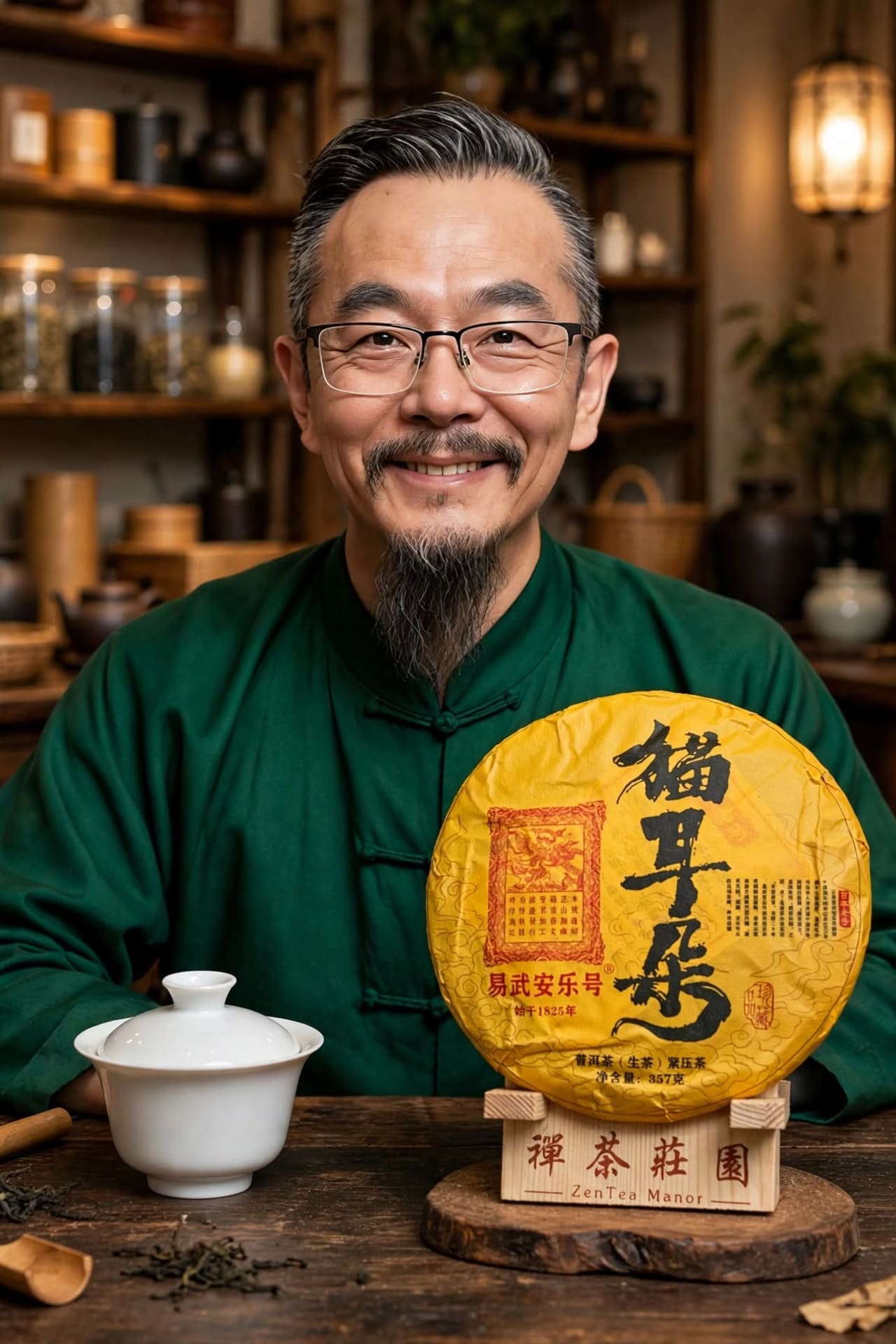
CA-034 Anle Hao Mao Er Duo 2023
Click for details

CA-035 Anle Hao Duoyishu Tall-Stem 2023
Click for details
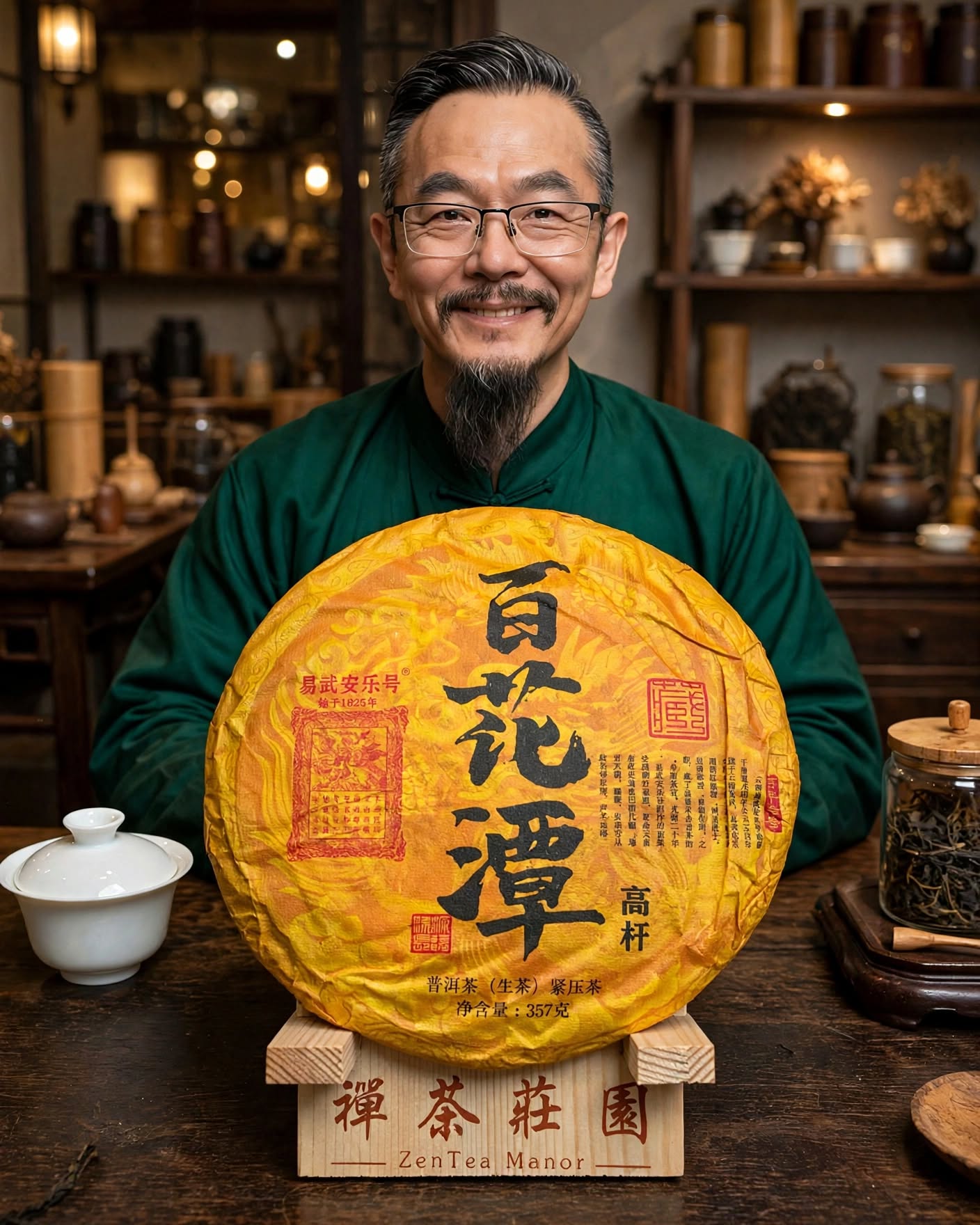
CA-036 Anle Hao Baihuatan Tall-Stem 2023
Click for details
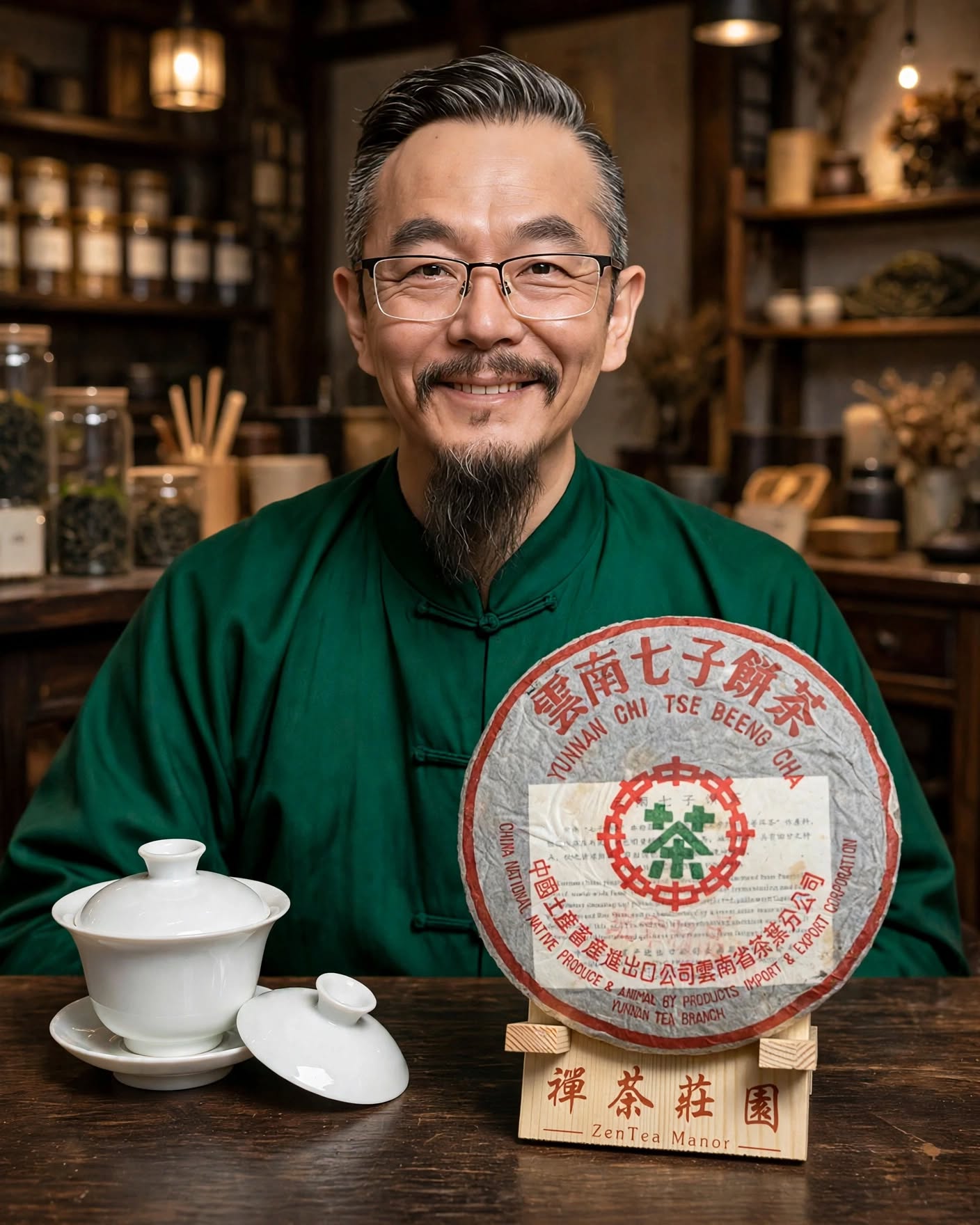
CA-037 中茶綠印 1999 班章精品七子餅(熟茶)
Click for details
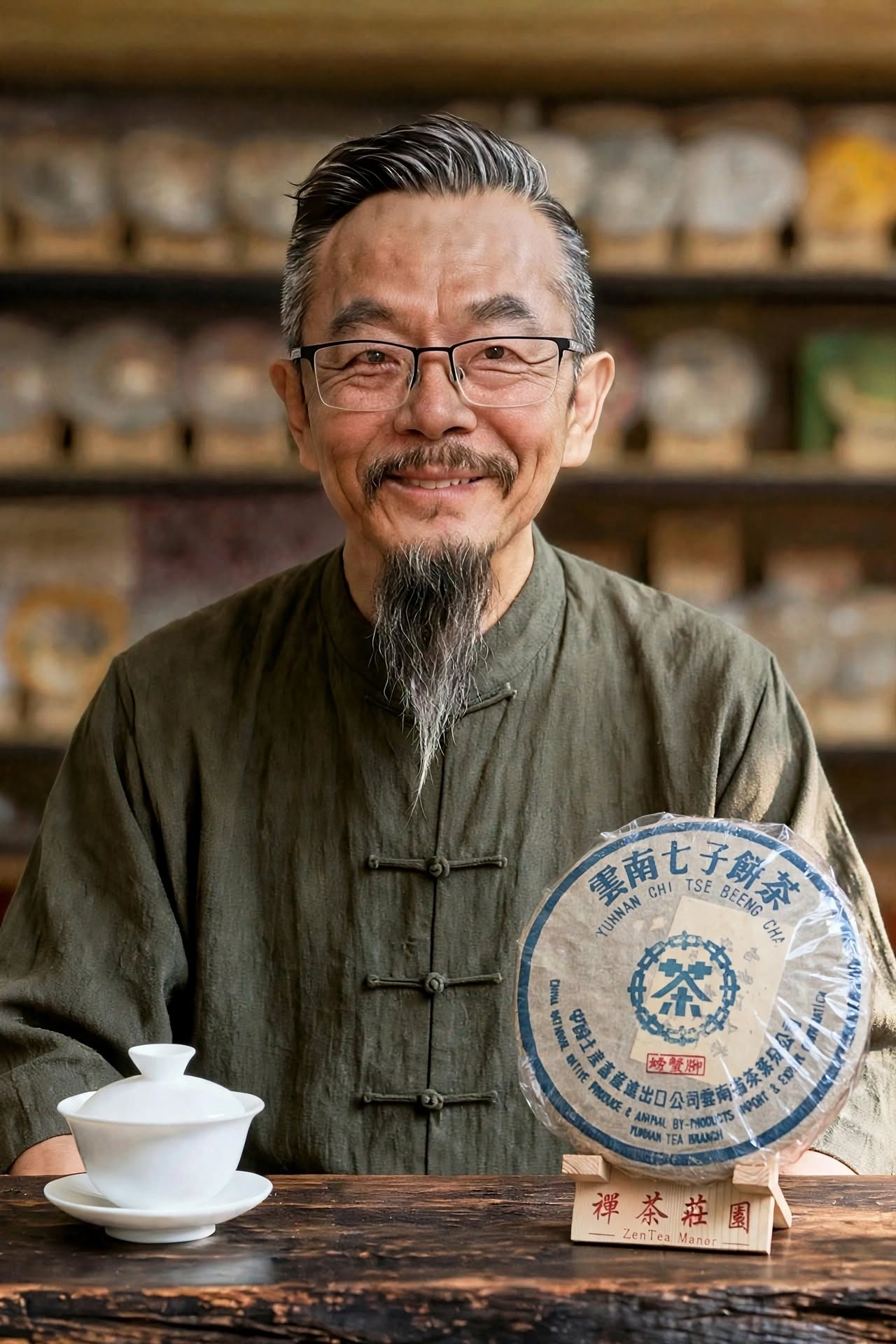
CA-001 Crab-Legs Seven-Cake Raw Pu-erh
Click to view details
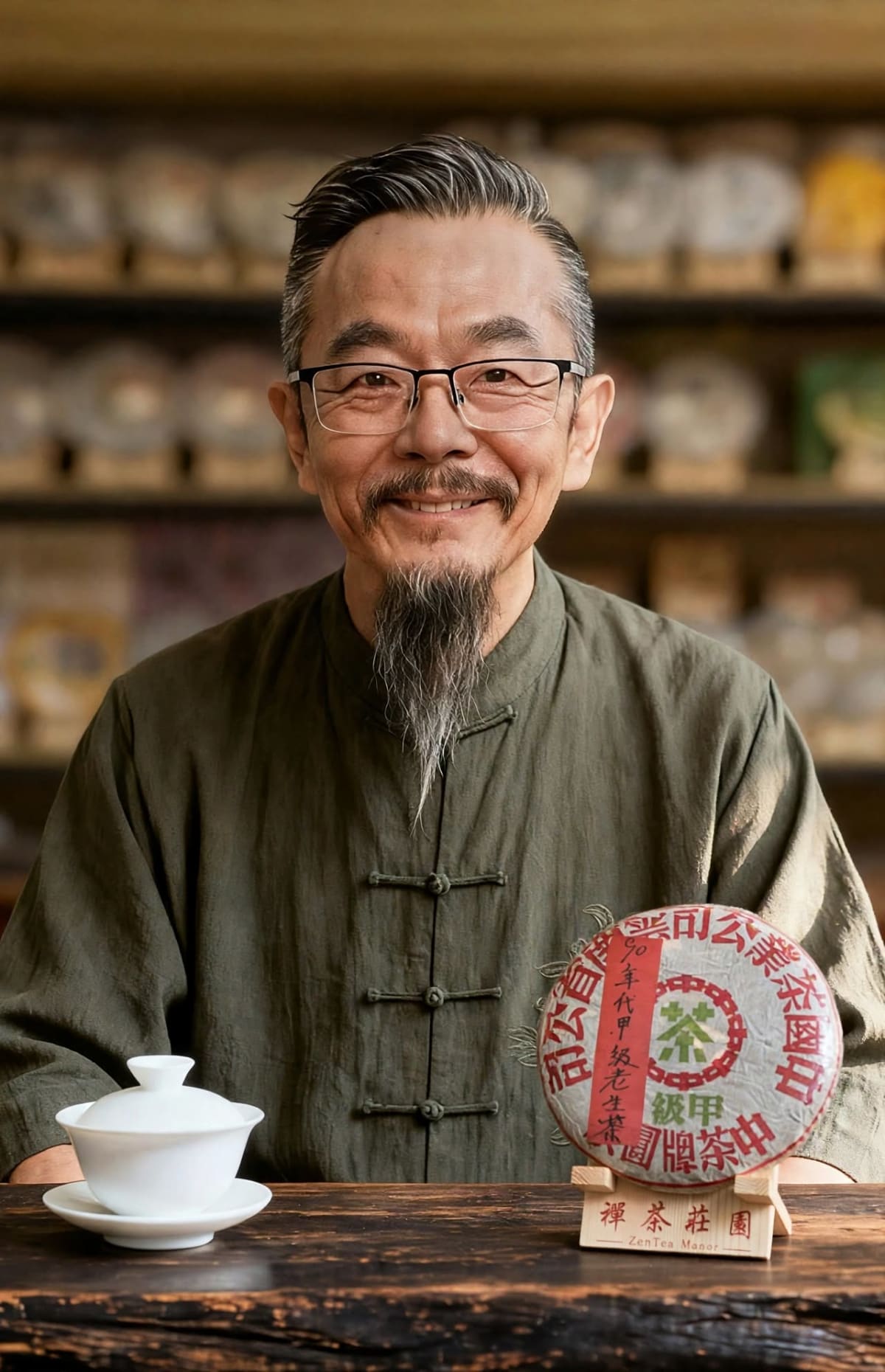
CA-002 Grade-A Aged Raw Pu-erh · Green Print
Click to view details
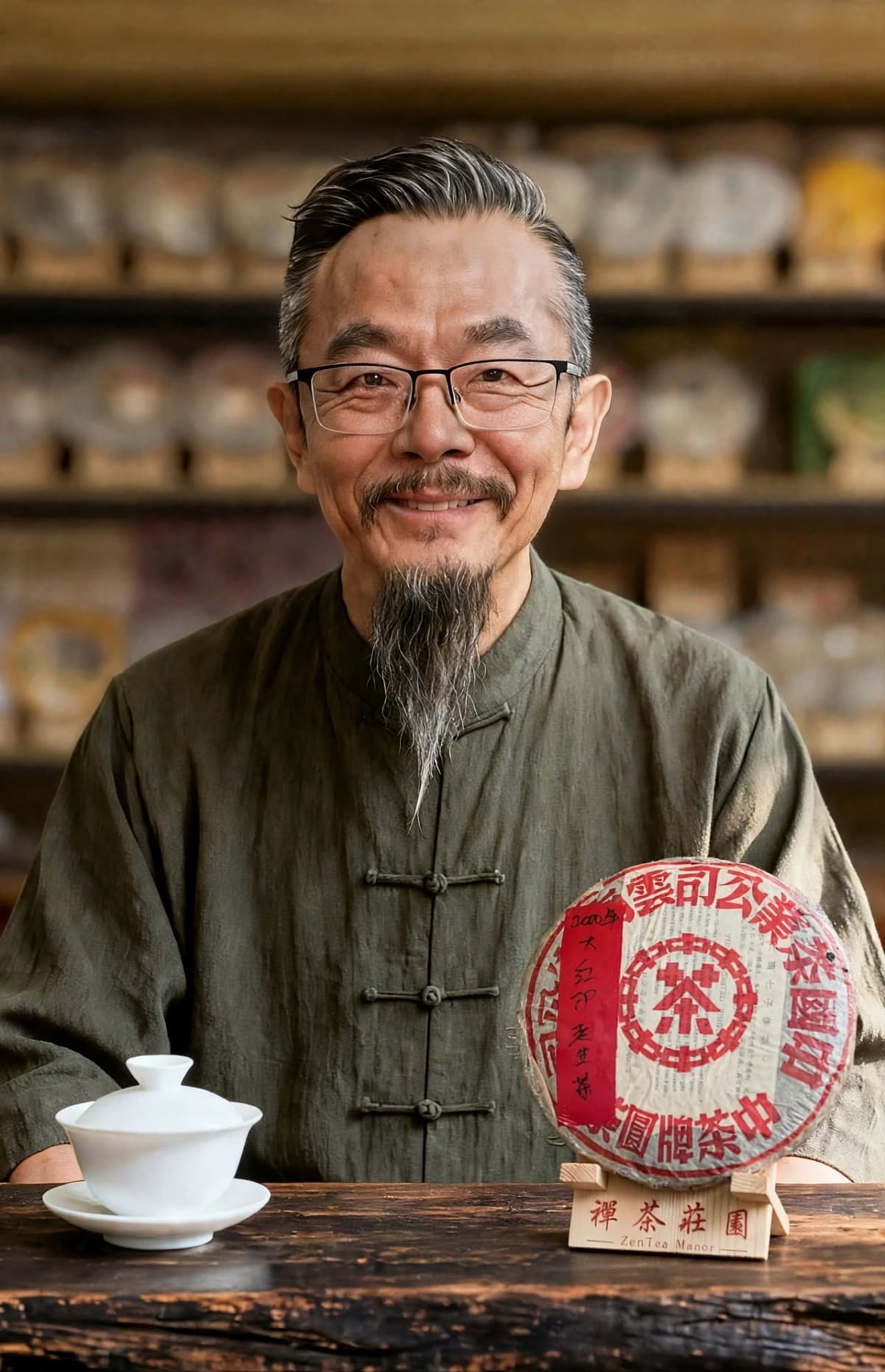
CA-003 Year-2000 Red Print Aged Raw Pu-erh
Click to view details
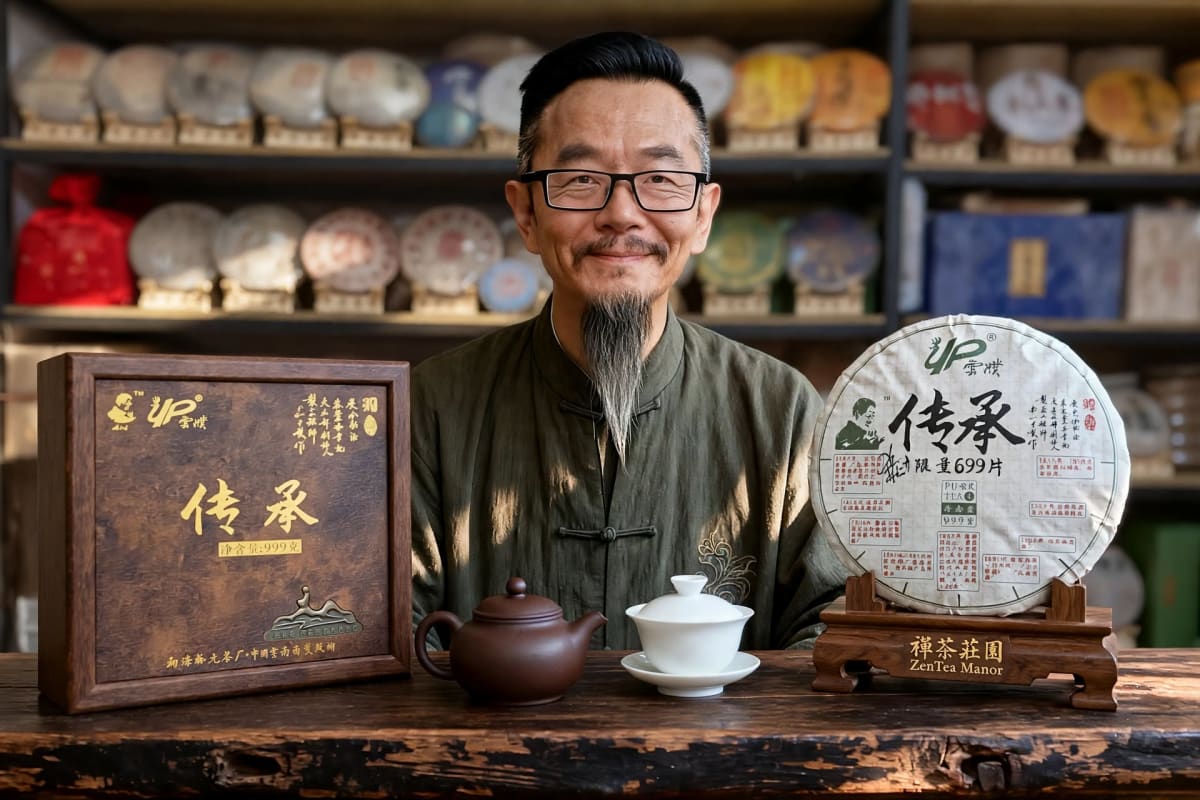
CA-007 Legacy · Yu Zhengcai 999g Commemorative Cake
Click to view details
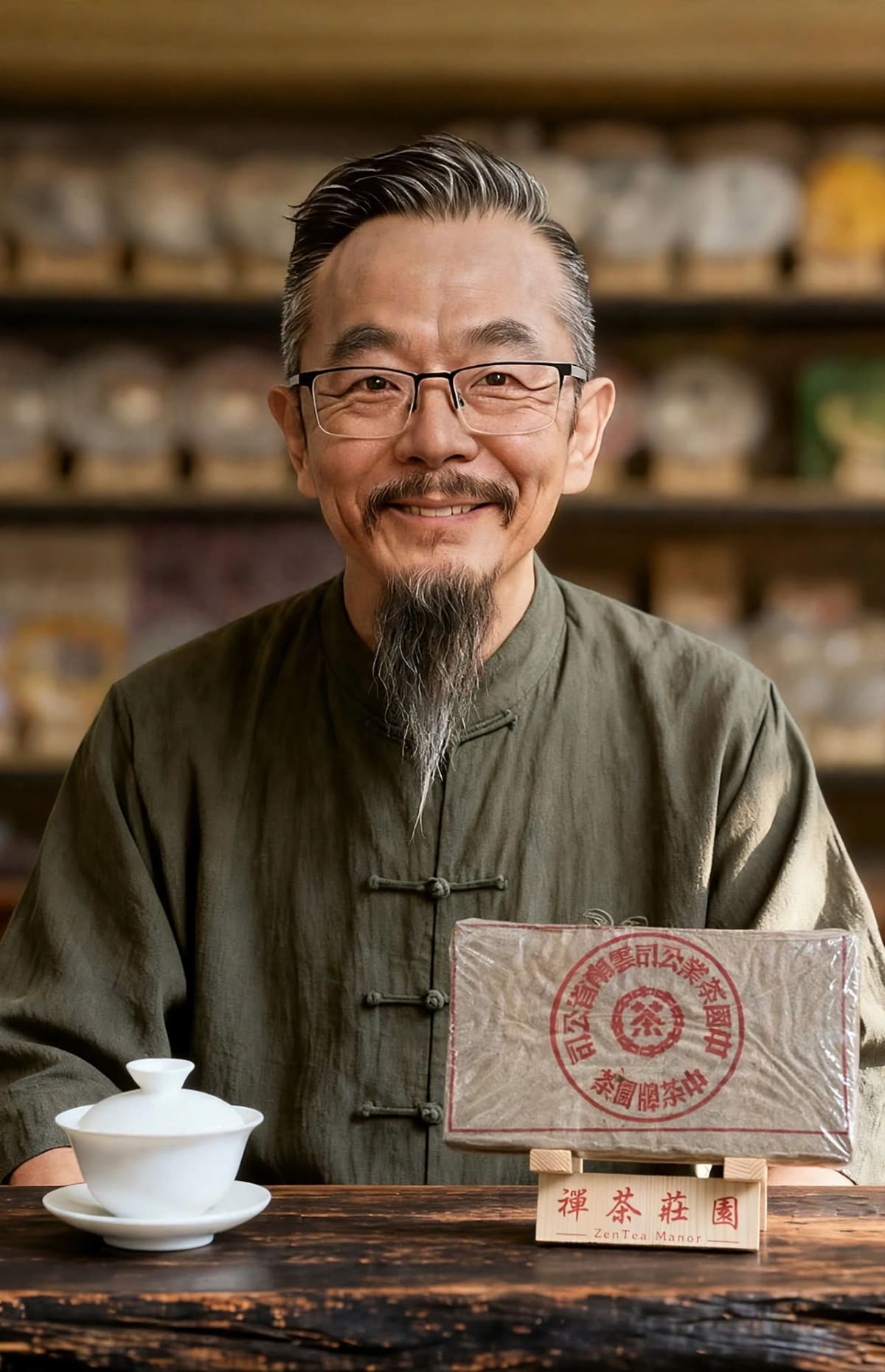
CA-008 Zhongcha Red Print Brick
Click to view details
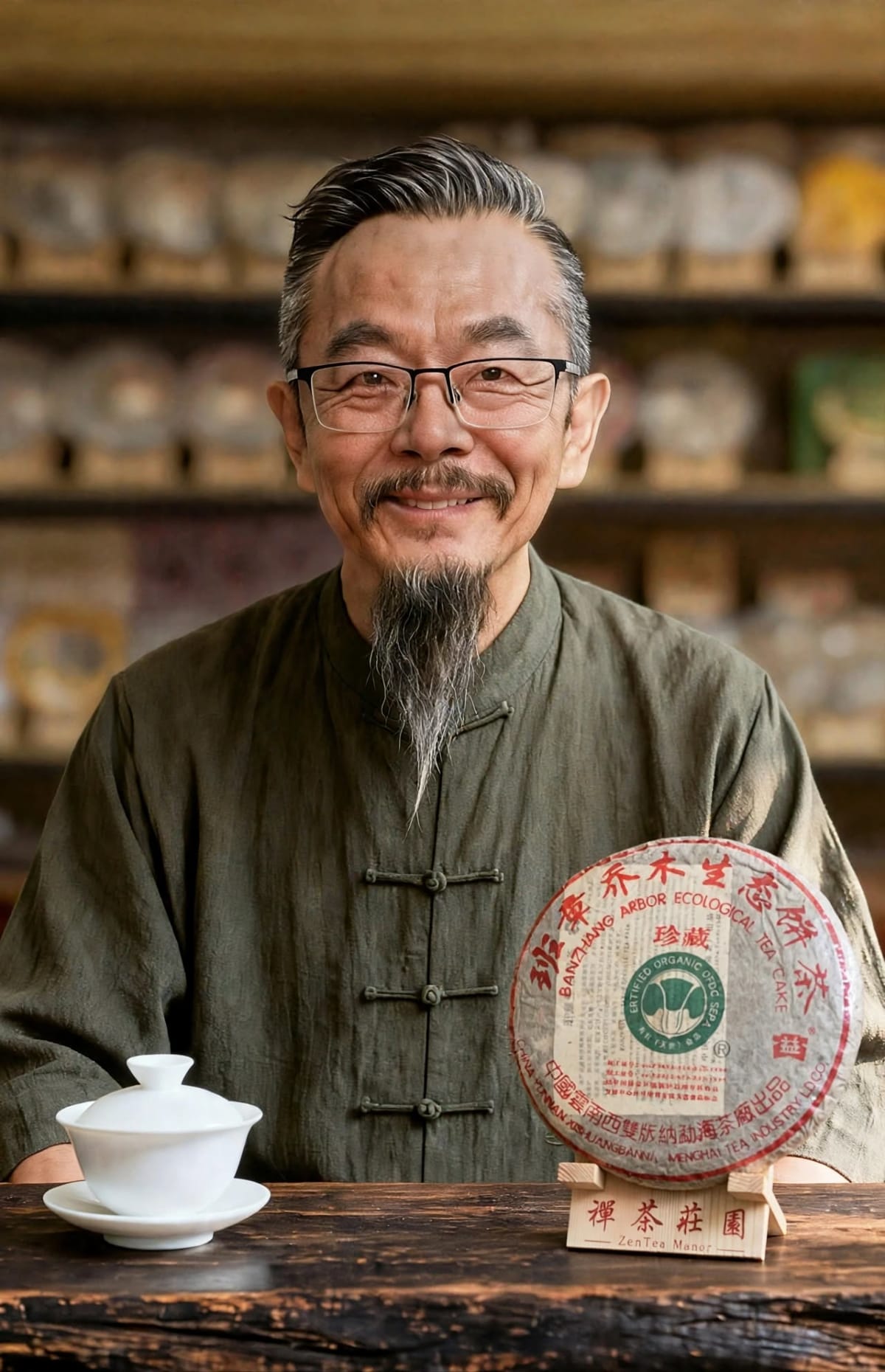
CA-010 Banzhang Arbor Ecological Tea · Reserve
Click to view details
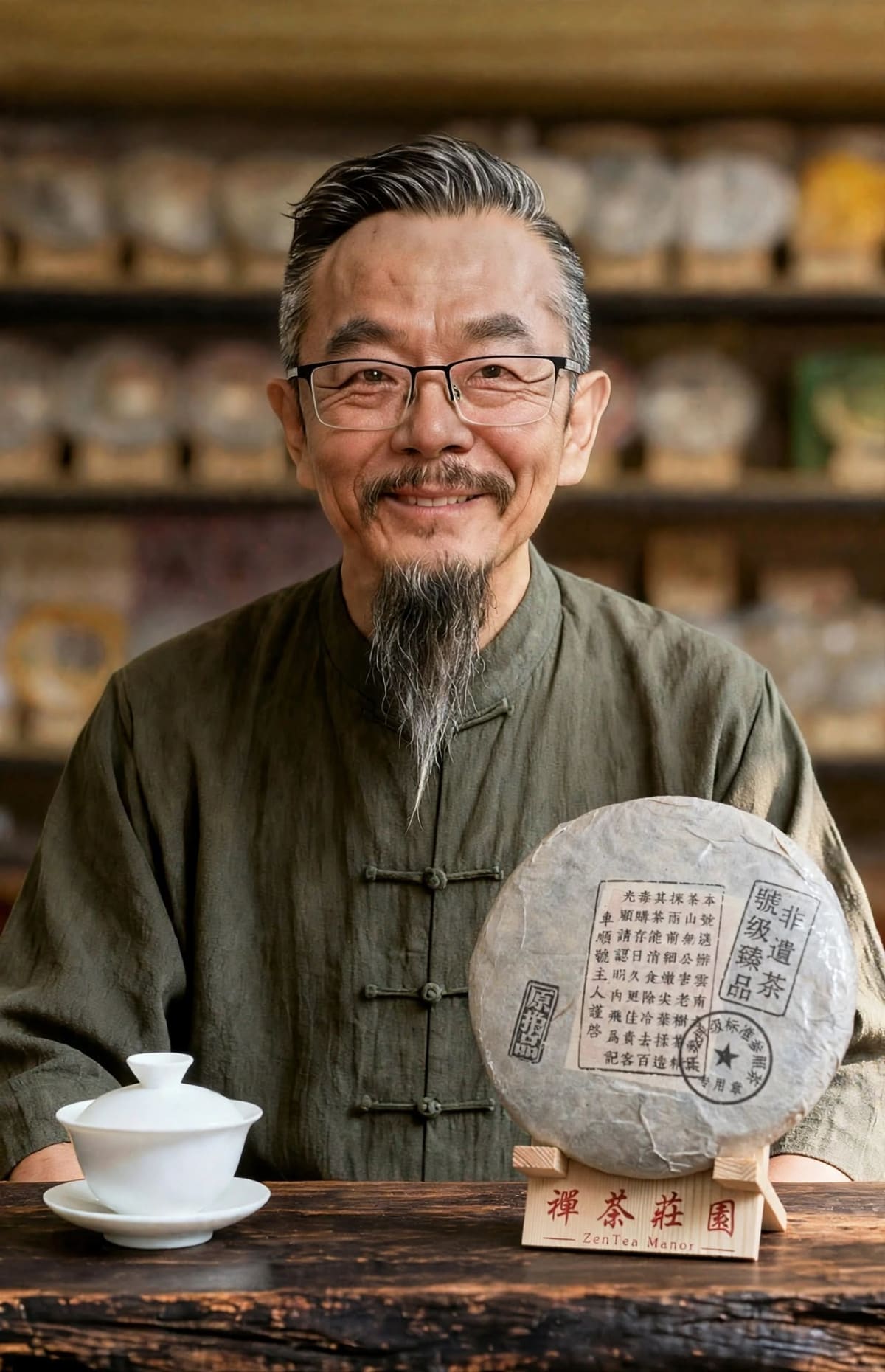
CA-011 Intangible-Heritage Che Shun Hao
Click to view details
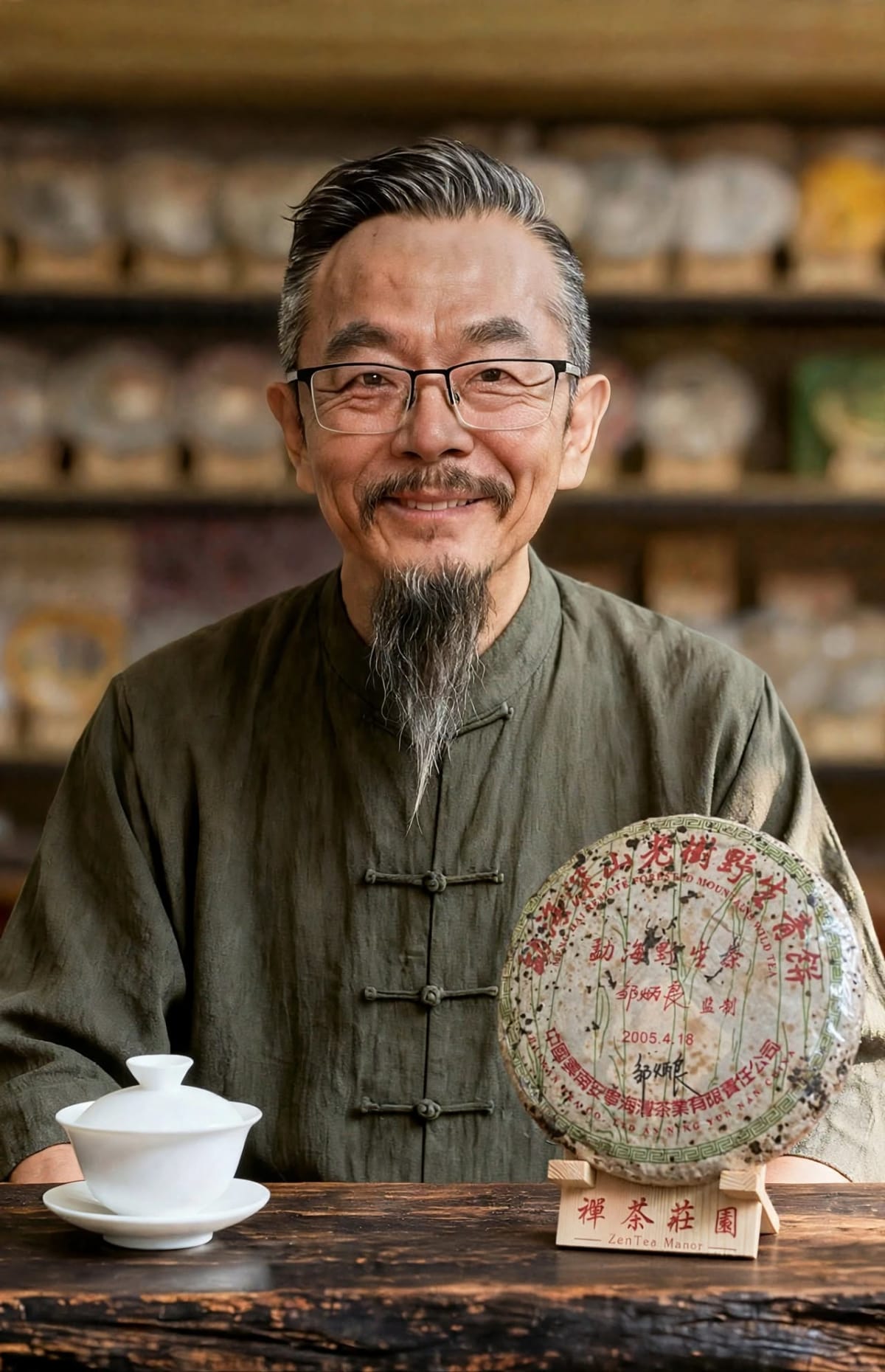
CA-012 Haiwan Zou Bingliang Signed · Menghai Wild Tea
Click to view details
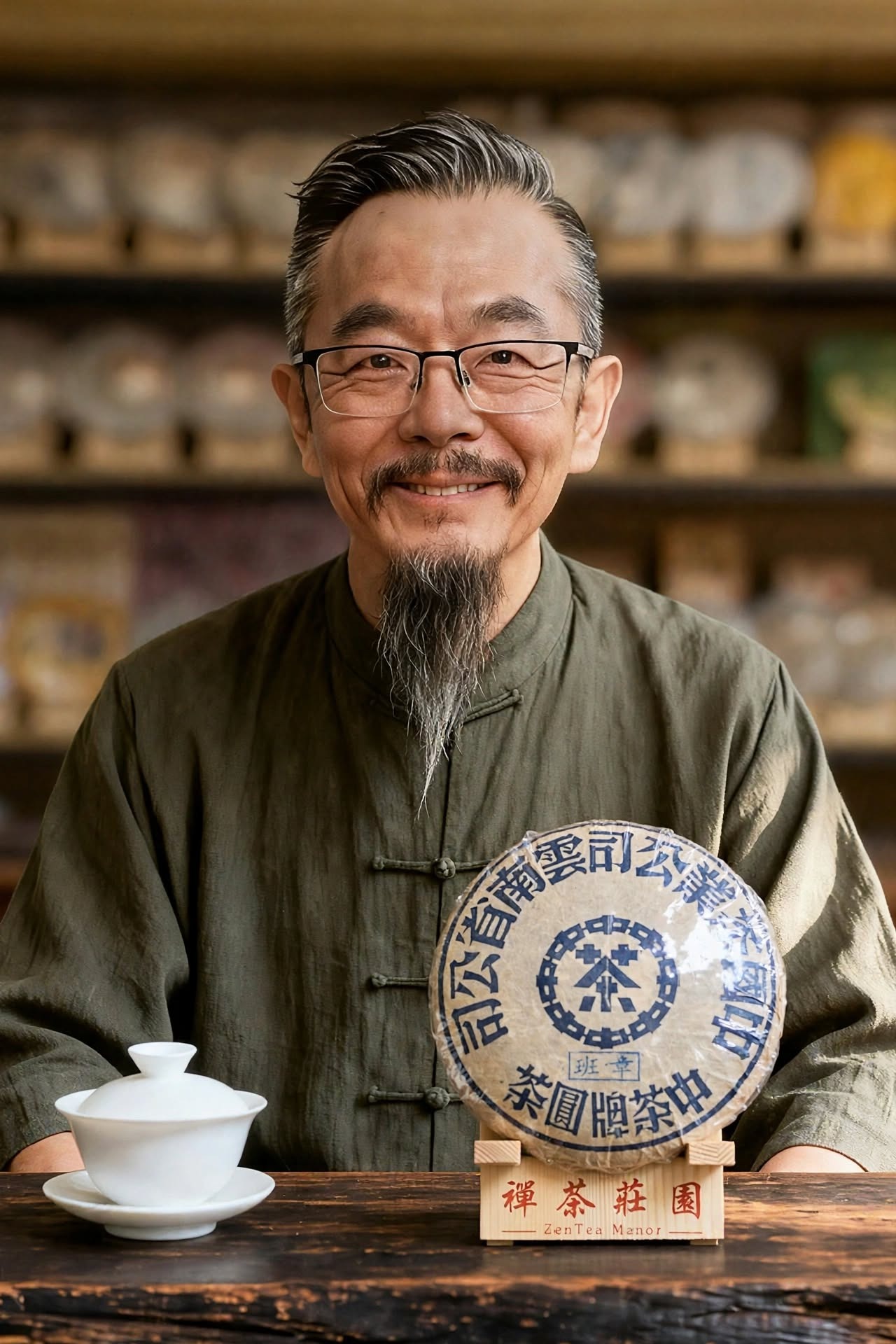
CA-013 Zhongcha Banzhang Blue Print
Click to view details
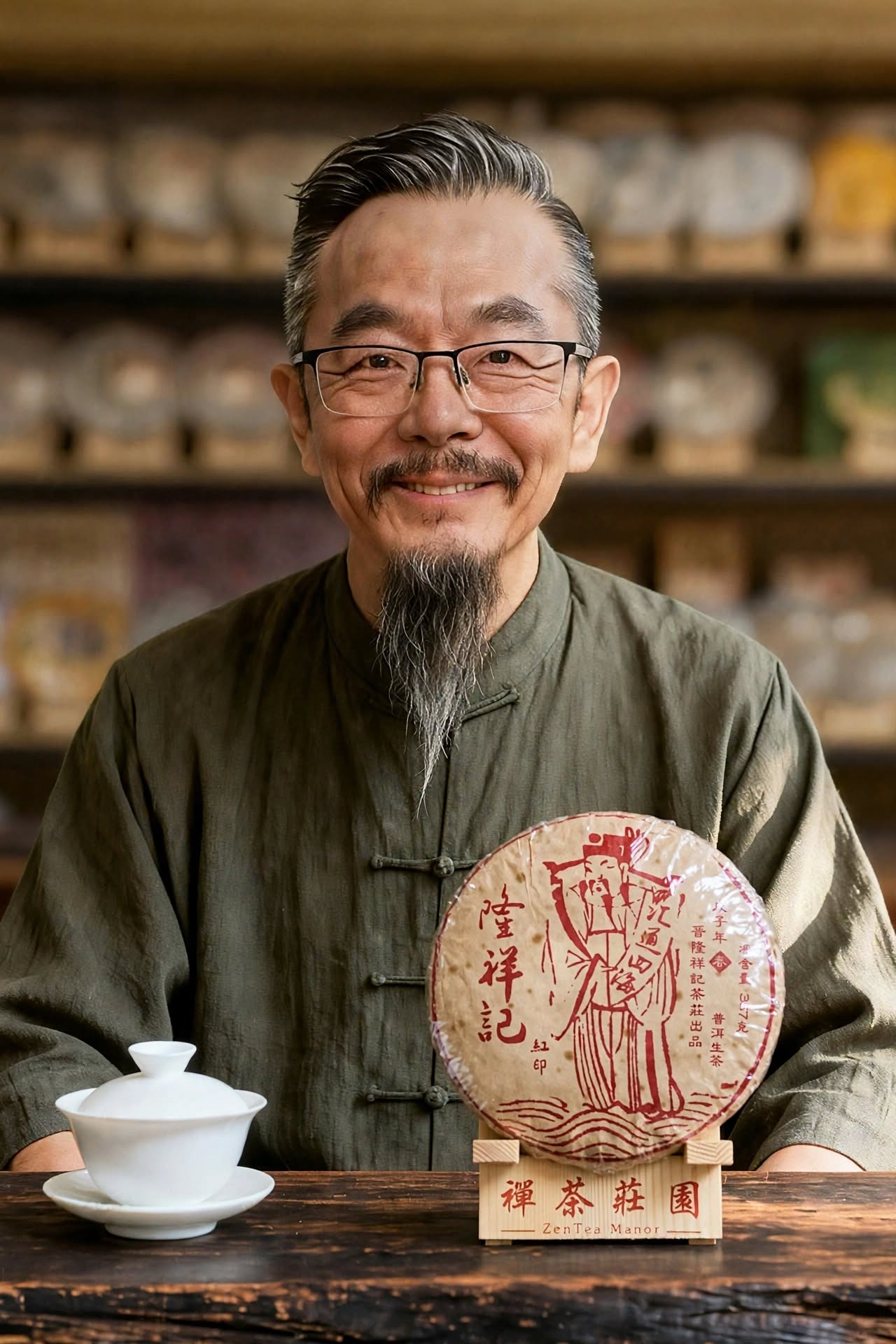
CA-014 Long Xiang Ji Red Print
Click to view details
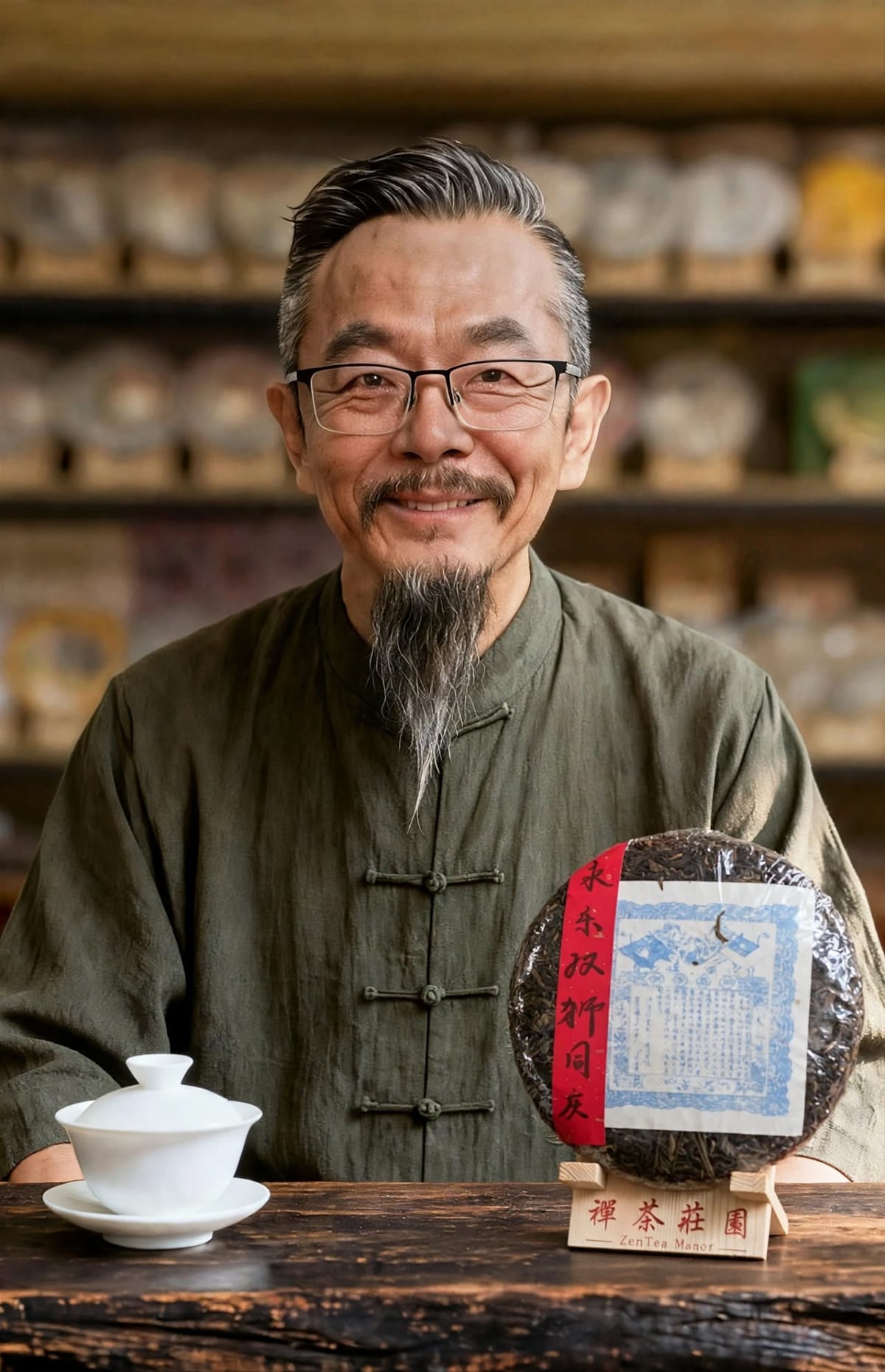
CA-015 Tong Qing Hao Blue Ticket Nude Cake
Click to view details
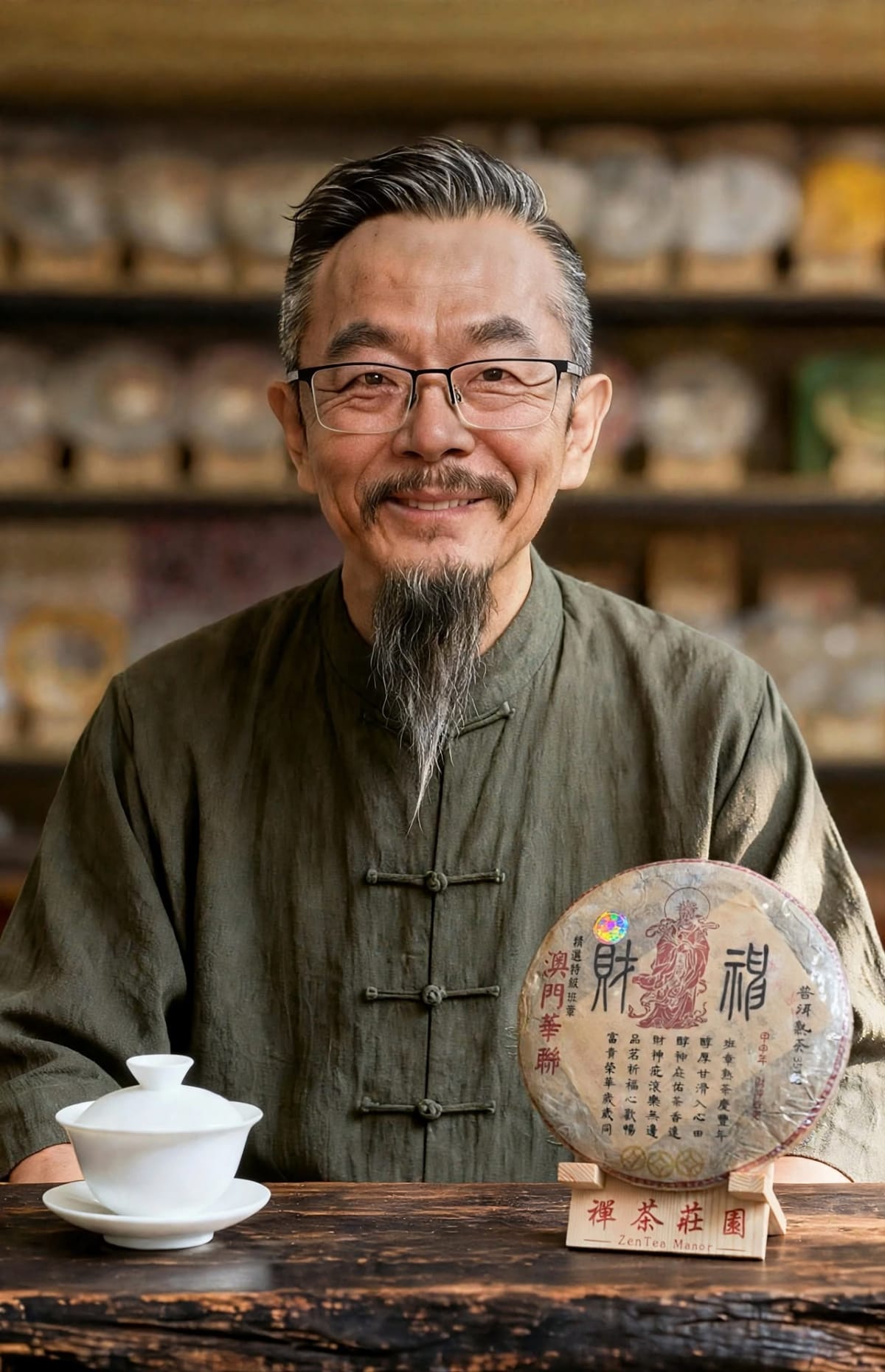
CA-016 Macau Hua Lian Fortune-God Banzhang
Click to view details
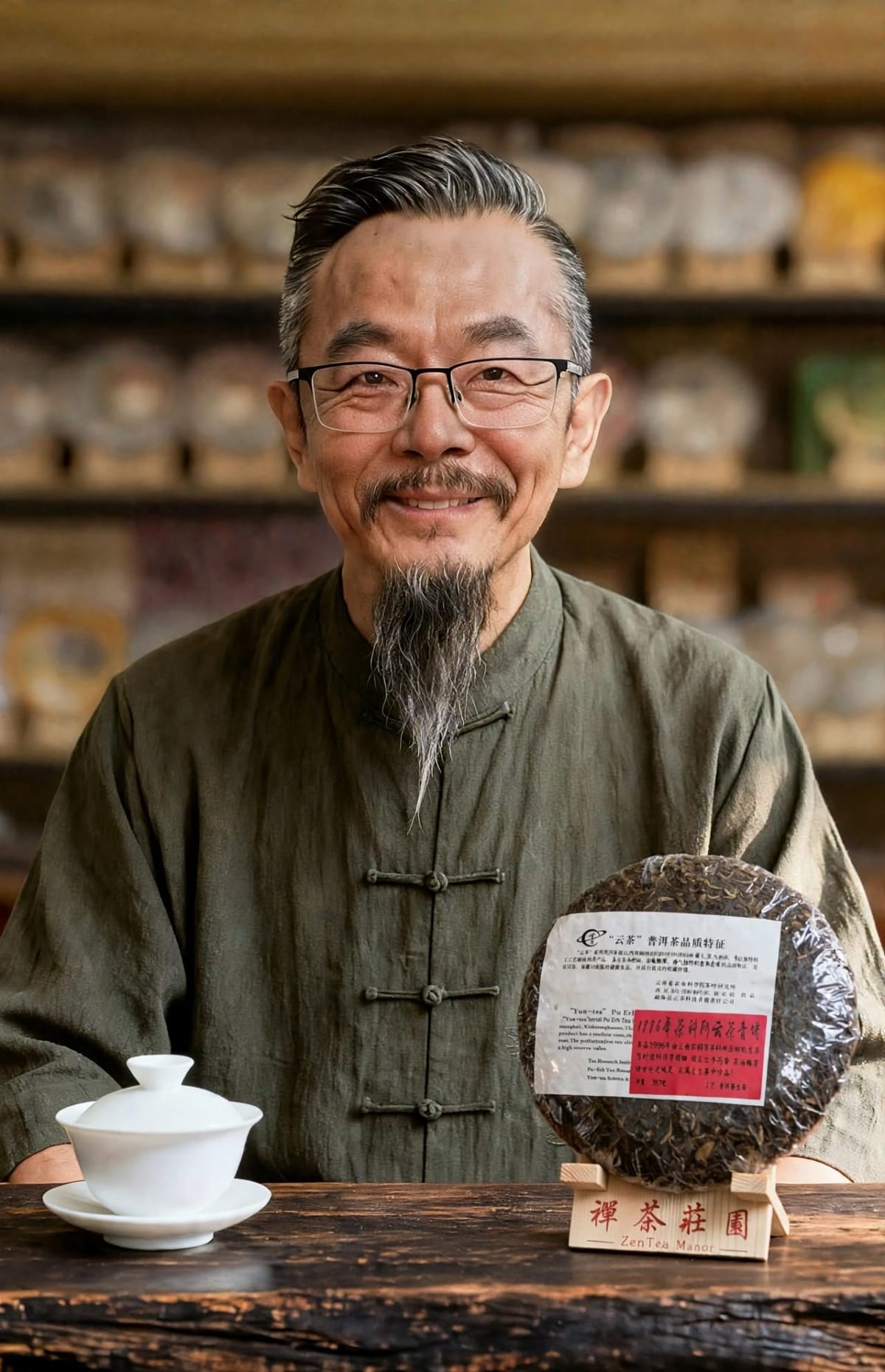
CA-017 1996 Tea Research Institute “Yun Tea” Raw Cake
Click to view details
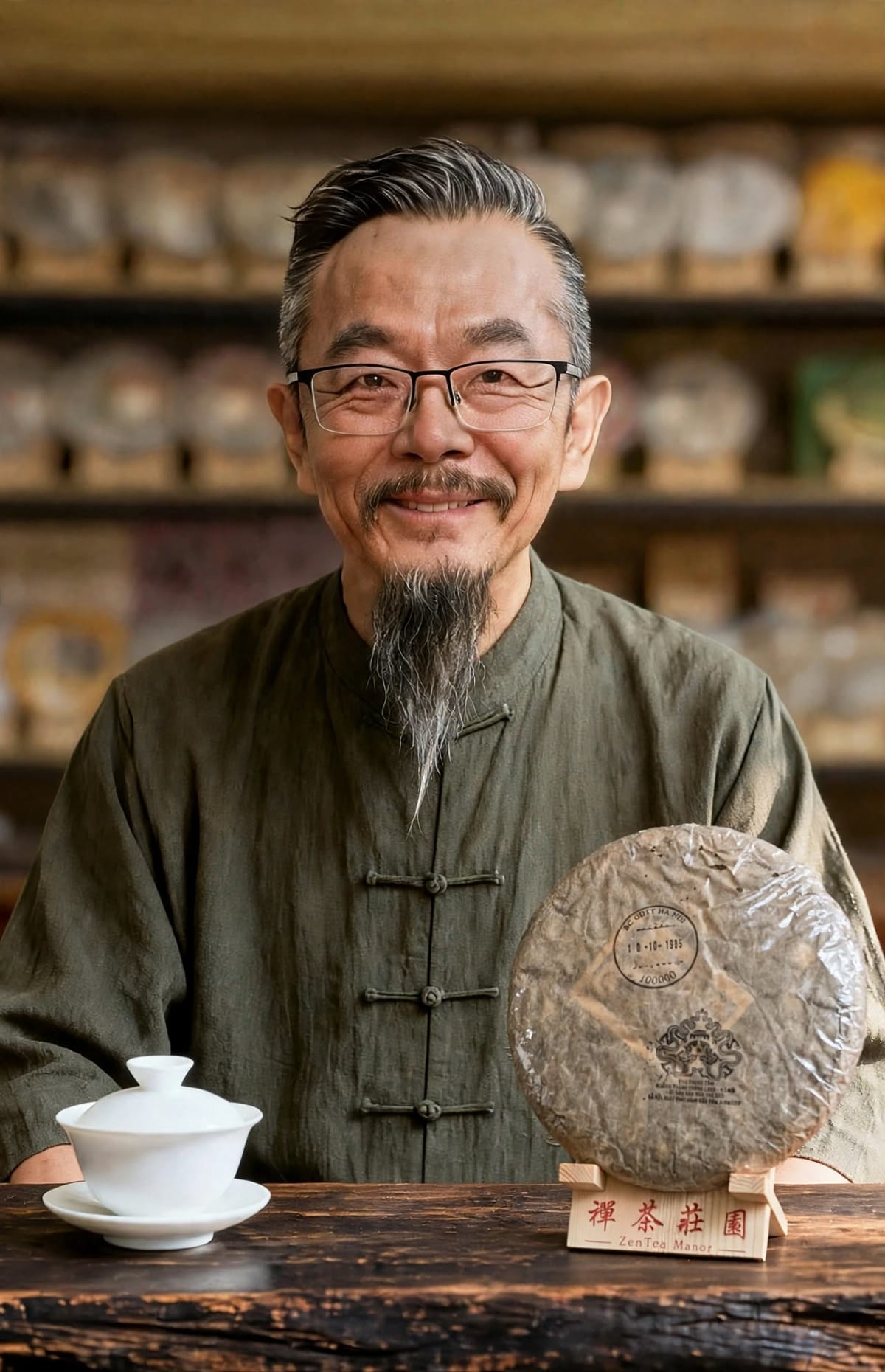
CA-018 Vietnam-Postmark Cake · Front + Back
Click to view details
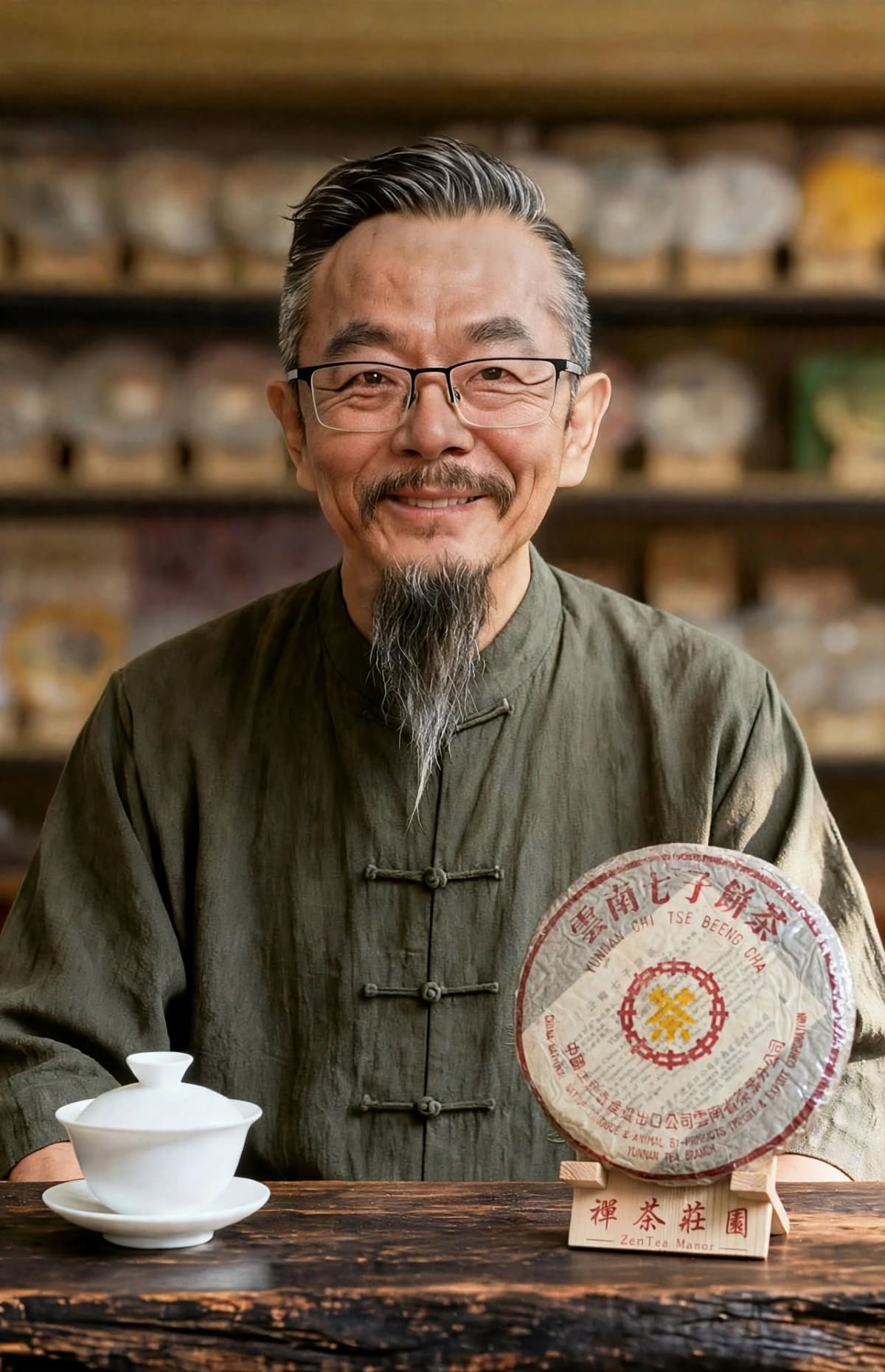
CA-020 Zhongcha Yellow Print 2004-7542
Click to view details
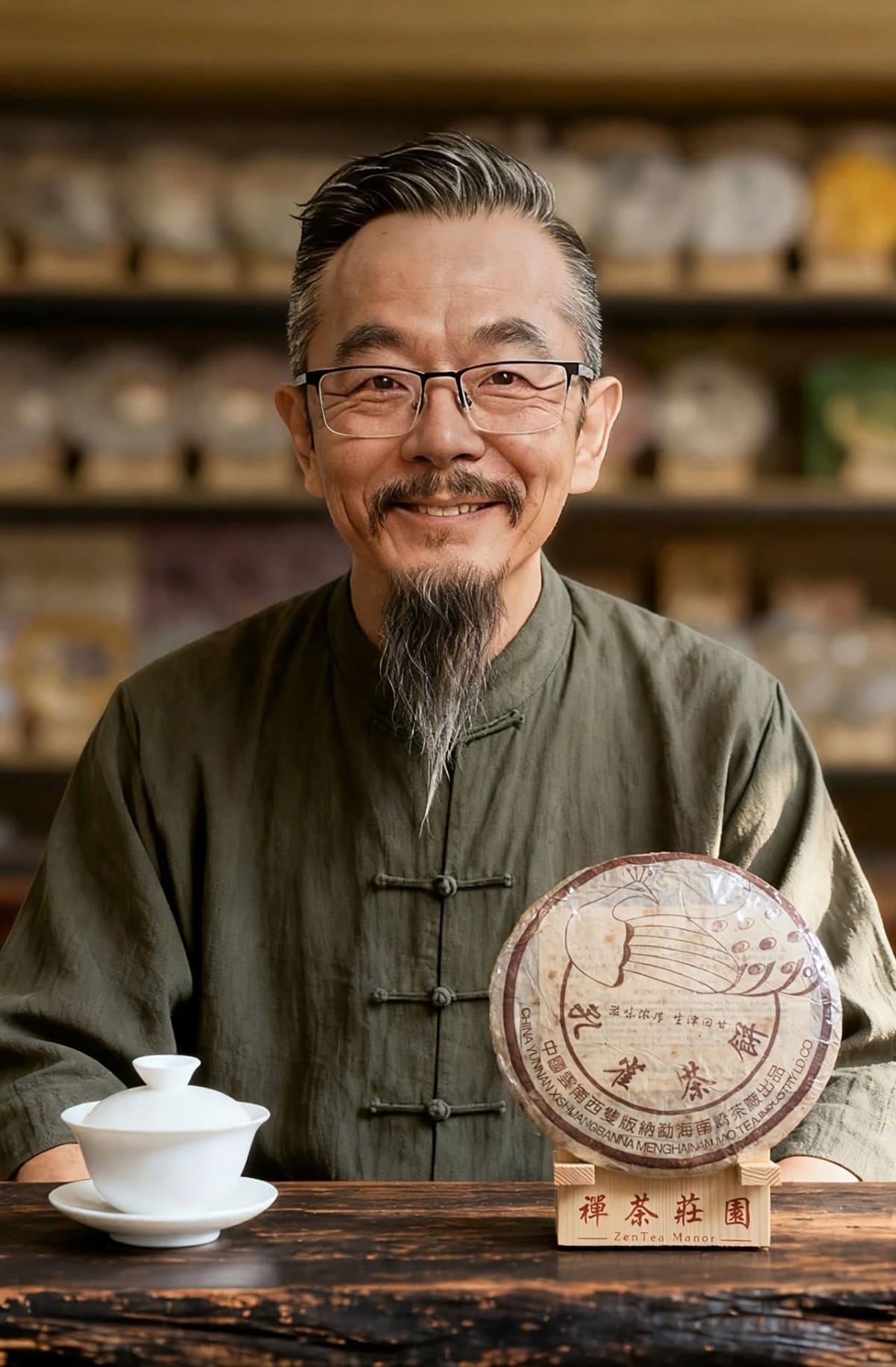
CA-022 Nanjiao Peacock Cake
Click to view details
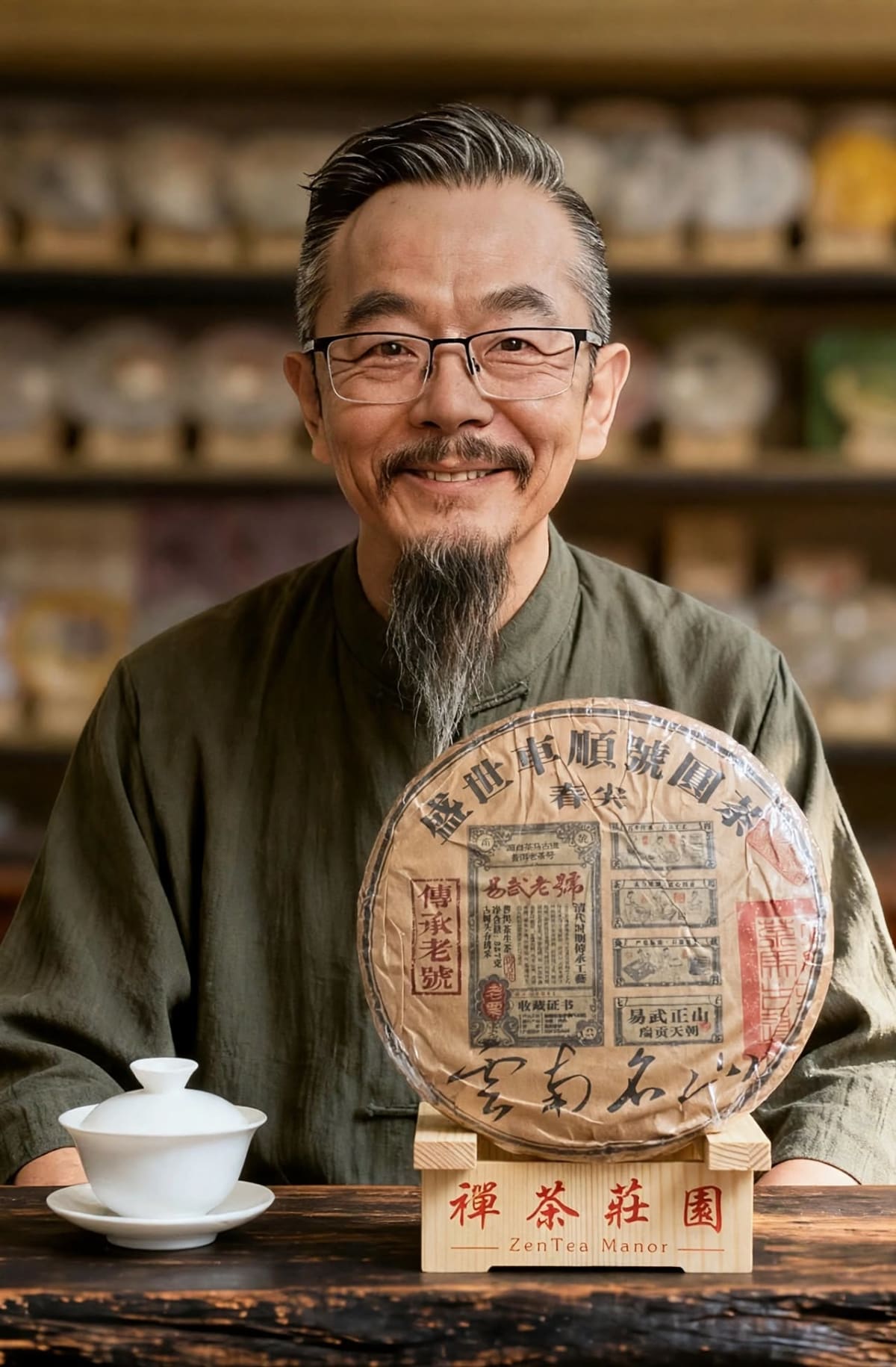
CA-023 Shengshi Che Shun Hao · Spring Tip
Click to view details
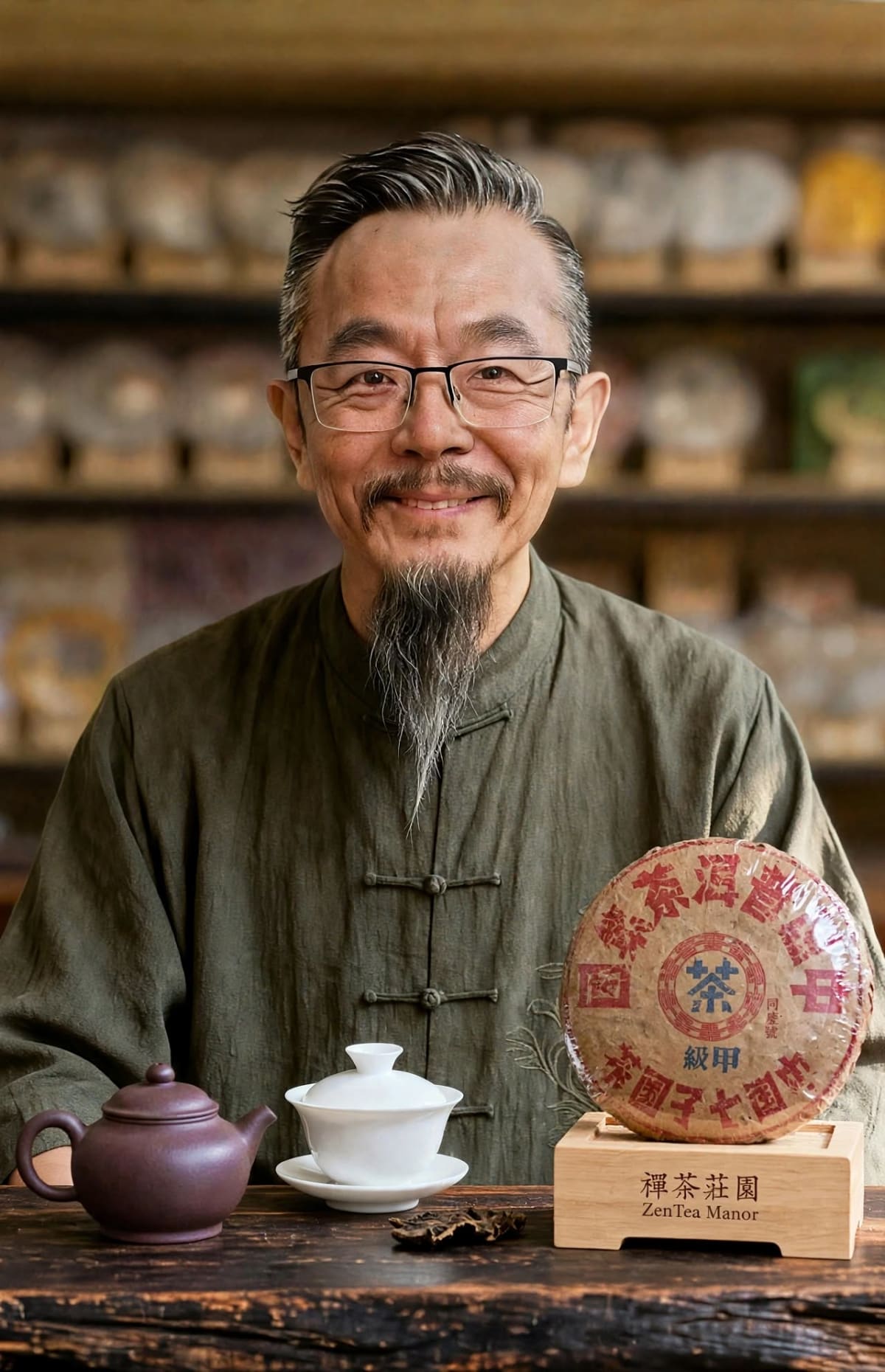
CA-024 Blue Print Iron Cake · Taiwan Edition
Click to view details
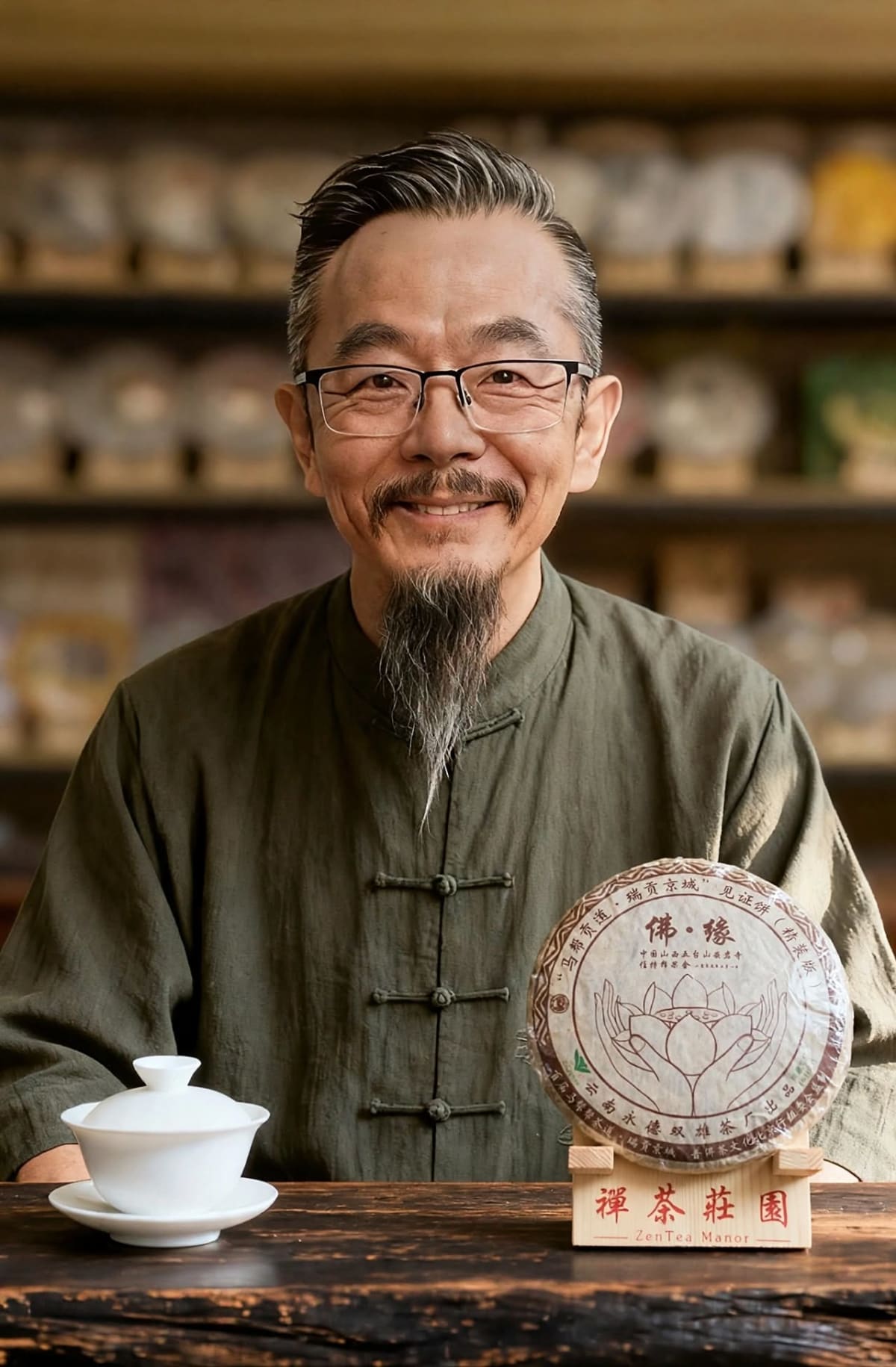
CA-025 Buddha-Fate Caravan Witness Cakes ×2 + Certificate
Click to view details
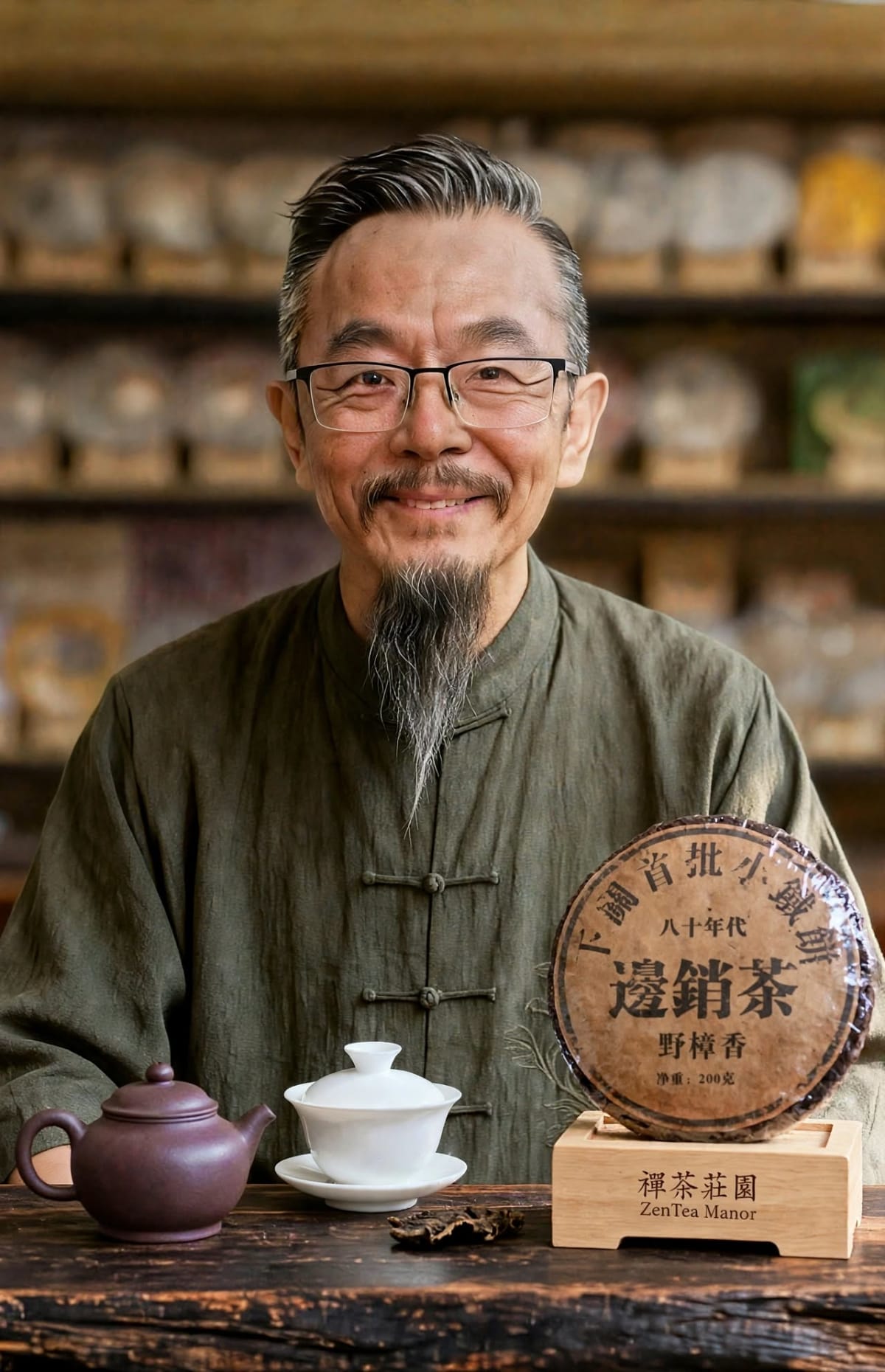
CA-026 1980s Wild Camphor-Aroma Border-Market Iron Cake
Click to view details
CA-001 Crab-Legs Seven-Cake Raw Pu-erh
Material Year: Material 2003 (label)|Pressed: unlabeled|Repack: Gudao Tea Factory, Pu’er
This cake belongs to the first export batch of Zhongcha “Crab-Legs” seven-cakes, the earliest entry in this family collection. Its wrapper carries the classic “Eight-Zhong” design — a tea character encircled — an icon of China’s tea-export history. A red square seal reads “Crab Legs” (Korthalsella lobbii), a mistletoe known as “tea crab” that grows only on aged tea trees; its presence is a natural indicator of ecological purity, and in Jingmai and Bulang tea gardens it is traditionally picked by Bulang and Dai communities to brew alongside or apart from the tea. The label records raw material of 2003, repacked by Gudao Tea Factory in Pu’er with a second inspection before release. At twenty-three years of material age, this cake stands where medicinal aroma begins to rise — the golden entry segment of the aging curve. Oil stains and paper darkening on the wrapper mark the quiet work of time. Originally cellared in Kunming, Yunnan, then relocated in batches to Hong Kong.
- Cake
- Raw (sheng)
- 357g±
- SC11453080222520
- Wrapper: “Eight-Zhong” tea-character mark + red square seal “Crab Legs” + blank handwritten sticker
- Condition: wrapper lightly damaged at edge (leaf visible)
- Remark: neifei inner-ticket photography pending
- Rarity: pending assessment
CA-002 Grade-A Aged Raw Pu-erh · Green Print
Material Year: Handwritten sticker “1990s” / label “material 1980s” — dual provenance recorded as-is|Pressed 2022-06-18
A core member of this collection. The wrapper’s arcing red characters “China Tea Corporation” and green Eight-Zhong mark revive the vocabulary of the 1950s Grade-A Round Cake — a revival aesthetic, unrelated to tea age. A handwritten red sticker notes “1990s Grade-A Aged Raw”; the reverse label records material gathered in the 1980s, pressed June 2022 by Yunnan Zhongcha’s Menghai factory. Both vintages are recorded as they stand: collector’s note from the 90s, factory declaration from the 80s — adjacent decades, both true, final vintage awaiting the neifei. Material pressed after nearly four decades of cellaring begins its transformation from a high plateau; by the saying “thirty years to the summit,” this cake already stands within old-tea territory. The Grade-A designation belongs to the pre-national-standard grading tradition of the Zhongcha system. Red Print, Green Print, Snow Print, 88 Qing, 8582 — the acknowledged Menghai star lineage. Originally cellared in Kunming, relocated in batches to Hong Kong — the classic mid-age aging path.
- Cake
- Raw
- 357g
- Yunnan Zhongcha Tea Co. Menghai Factory
- SC11453282245726 (light-print 151727/151731 as recorded)
- Condition: wrapper lightly creased, some characters obscured
- Note: vintage pending neifei verification; **not in first auction consignment before finalization**
- Rarity: Class I (Grade-A line + aged material fresh-pressed)
CA-003 Year-2000 Red Print Aged Raw Pu-erh
Material Year: Material 2000-04-18|Pressed 2022-06-18
The Red Print is the head classic of the print-grade lineage. This cake’s label records material gathered April 2000 and pressing June 2022 — a pair of dates twenty-two years apart. The year 2000 marks the watershed when Pu-erh turned from the diaspora-trade tradition toward the mainland collecting market; material from this segment is now regarded as prime mid-age stock. Cakes of this period are noted in market records for sweet, full-bodied liquor — testimony to the cellaring value of millennium-era material. At twenty-six years of material age the cake climbs the long slope from “medicine at ten years” toward “summit at thirty,” its transformation now stabilized after 2022 pressing. The “YUNNAN CHITSU PINGCHA” panel and rich bilingual wrapper make it a fine specimen of the contemporary print-revival wave — visual memory of the print grades, aged-material depth, and modern repack standards meeting on one cake.
Originally cellared in Kunming, relocated in batches to Hong Kong.
- Cake
- Raw
- 357g
- Yunnan Zhongcha Menghai Factory
- sc11453282243728
- Wrapper: Red-Print-style paper + “YUNNAN CHITSU PINGCHA” English panel + handwritten red sticker
- Note: red gift-box set context
- Condition: wrapper intact (shrink-wrapped)
- Rarity: Class II
CA-007 Legacy · Yu Zhengcai 999g Commemorative Cake
Material Year: Material 2016|Pressed 2023-11-15 (red inkjet)
A 999-gram commemorative cake and a signature work of portrait-tea: the wrapper folds a tea master’s lifetime into one biography. The golden timeline begins “1937, born in Guangdong,” notes tea studies at Dali Agricultural College in 1956, and graduation in 1959 to the Menghai Tea Factory — the “Whampoa Military Academy of Pu-erh.” By 1983 Yu Zhengcai served as party secretary and deputy director of technology; the 1988 entry records the planting of the Bada and Bulang mountain tea estates and participation in the benchmark 8582 recipe — the cake later crowned “88 Qing.” Further entries credit the 92 square brick, the 88 Qing cake, and the Peacock raw cake; in 2005 he founded Yuyuan Tea Factory as the industry entered its group-corporation era. The state-era Menghai factory drew fine one-bud-two-leaf material from its own Bada and Bulang estates — the estate strategy behind stable, high-grade recipes. Four commemorative layers stack here: non-standard 999g, edition of 699, relief plaque, handwritten signature. Material 2016 now stands ten years old — crossing “treasure at seven” toward “medicine at ten.”
Originally cellared in Kunming, relocated in batches to Hong Kong.
- Cake in wooden casket
- Raw
- 999g (non-standard)
- Publisher: Yunnan Yunke Ancient-Tree Tea Co.
- Maker: Xishuangbanna Yuyuan Tea Co.
- SC11453282215557
- Features: biography-timeline wrapper + “Legacy” calligraphy + hand signature + edition of 699 + casket plaque + YP® mark + portrait
- Condition: wrapper intact (photographed on gold velvet)
- Rarity: Class I (portrait tea + limited + non-standard)
- Line: portrait tea
CA-008 Zhongcha Red Print Brick
Material Year: Material 1980s (label)|Pressed: unlabeled
The brick transplants the round cake’s seal motif onto a rectangular form — an extension of Zhongcha wrapper vocabulary across formats. The reverse label records 1980s material, 500 grams, repacked by Gudao Tea Factory with second inspection. Two keywords set its position: 500 grams, a non-standard format; and 1980s material — four decades old, already within the “thirty-years-to-summit” peak segment. Bricks were born for the road: compact and stackable, they rode the Tea Horse Road where round cakes would roll; pressed harder in wooden or iron moulds, they transform more slowly — the slow-aging route. The 357-gram cake itself derives from the seven-cake tally (one tong of seven, twelve tong to the load), a system inherited from Qing-era tea houses; the 500-gram brick steps outside that frame as an independent quantification, naturally scarcer. The dual signatories — material factory and repack factory, each responsible on one label — mark the repack system of the 2000s. Round seal on square brick: an “round-heaven, square-earth” design note.
Originally cellared in Kunming, relocated in batches to Hong Kong.
- Brick
- Raw
- 500g± (non-standard)
- Gudao Tea Factory, Pu’er repack
- SC11453080222520
- Features: red round-seal motif + Eight-Zhong mark + red border + reverse white label
- Note: pressing year unlabeled (material 1980s per label)
- Condition: crisp impression, label complete
- Rarity: Class I
CA-010 Banzhang Arbor Ecological Tea · Reserve
Material Year: Material 2004|Pressed: unlabeled
A heavyweight of the mountain-origin line. The wrapper pairs arcing red characters “Banzhang Arbor Ecological Tea Cake” with its English rendering, a green “CERTIFIED ORGANIC OFDC SEPA” roundel, and a 1995-series processing certificate number. OFDC — the Nanjing Organic Certification Center — is China’s authoritative organic body; in the early-2000s Yunnan tea scene such certification was scarce, earned through soil, process, and traceability audits. Banzhang itself needs little introduction: Lao Banzhang village in Bulang township, Menghai county, 1,700–1,900 meters, a Hani settlement dating (by record) to 1476; its five villages command the “tea king” reputation for forceful cha-qi and wild-mountain character. Organic certification layered on the Banzhang name makes double scarcity — ecology, mountain, and certification on one verifiable quality chain. The reverse label records 400 grams, material 2004, repacked by Gudao Tea Factory. At twenty-two years the cake runs steadily in the “medicine at ten years” segment with the long slope of “thirty years to summit” still ahead.
Originally cellared in Kunming, relocated in batches to Hong Kong.
- Cake
- Raw
- 400g± (non-standard)
- Menghai Tea Factory issue; Gudao Tea Factory repack
- SC11453080222520
- Features: OFDC organic medallion + 1995-series processing certificate no. + “Reserve” + “Yi” ® mark + arced English maker name
- Condition: wrapper intact
- Rarity: Class I (Banzhang + early organic + non-standard)
CA-011 Intangible-Heritage Che Shun Hao
Material Year: Material 1990s|Repacked 2024
This wrapper deliberately mimics the antique: a vertical multi-column prospectus in the manner of Qing-era tea-house notices, signed “Respectfully, the Master of Che Shun Hao,” stamped with a black square “Original Auction Piece” and a round “Reference Sample Tea” seal. Che Shun Hao is an old Yiwu house. The tribute-map context: of the six ancient tea mountains, “Yiwu holds half a mountain” — some 750 square kilometres woven from seven villages and eight stockaded hamlets; in 1744 the court entered Pu-erh into the Tribute Register, Yiwu was appointed the tribute procurement ground, and the “Tribute to the Dynasty” plaque stands as the historical credential of that honour — the very plaque Che Shun Hao’s name is tied to. The label records 1990s material repacked 2024 by Yunnan Yiye Tea Co. Vintage-brand replica over 1990s material — thirty-plus years of age, at the entrance of the summit segment. The reference-sample seal marks this batch’s specimen character within the repack system; the “non-sale” heading and its original label vocabulary belong to the piece’s circulation history — a separate matter from present auction eligibility, pending source confirmation.
Originally cellared in Kunming, relocated in batches to Hong Kong.
- Cake
- Raw
- 357g
- Yunnan Yiye Tea Co.
- SC11453010300141
- Features: antique-style vertical “fangdan” prospectus + “Intangible-Heritage Tea / Vintage-Grade Treasure” + “Che Shun Hao Master” + reference-sample seal
- Condition: wrapper intact
- Rarity: Class I
CA-012 Haiwan Zou Bingliang Signed · Menghai Wild Tea
Material Year: 2005-04-18 (wrapper date; material & press)
On the wrapper, the four characters “Supervised by Zou Bingliang” beside a hand-signed name. In portrait-tea collecting a signature is a craftsman’s guarantee in ink. Zou Bingliang, former director of the Menghai Tea Factory, steered the house through its golden age: the 7542 benchmark recipe — “the yardstick of raw Pu-erh” — took form there, and from the 1970s onward he led the factory’s pile-fermentation craft to mastery, the “Menghai flavour” ripe-tea lineage (7572 its classic type) becoming the trade’s benchmark. The 8582 and other classics belong to the same era under his hand; the trade honours him as a founding master of wo dui fermentation. In 1999 he founded Haiwan Tea Industry, the “Lao Tong Zhi” brand carrying the Menghai style onward. This cake — wrapper reading “Menghai Remote Forested Mountains Wild Tea” — unites wild-material declaration, master supervision, and an exact date: the most completely documented face in the portrait-tea group. Small worm-holes in the wrapper are the honest diary of natural cellaring, kin to the oil stains of time. Pressed 2005, now twenty-one years old.
Originally cellared in Kunming, relocated in batches to Hong Kong.
- Cake
- Raw
- Weight: unlabeled
- Maker: China Yunnan Anning Haiwan Tea Co.
- Features: “Supervised by Zou Bingliang” + hand signature (out of print) + “Menghai Wild Tea” + green fretwork border
- Condition: worm-holes in wrapper — natural marks of age
- Rarity: Class I (out-of-print signature + portrait tea + wild line)
- Line: portrait tea
CA-013 Zhongcha Banzhang Blue Print
Material Year: Material 2003|Pressed/Repacked 2024-05-21
The “Banzhang Blue Print” (colloquially “Guimian Lan”) wears a spare, classic face: blue characters arc around the round — “Corporation,” “China Tea,” “Yunnan Provincial Company,” “Zhongcha Brand Round Cake” — around a blue Eight-Zhong mark, with “Ban · Zhang” set in a small blue frame below. The Blue Print takes its name from the blue tea-character, third colour beside the Red and Green prints in the print-grade chromatic line. Lao Banzhang lies deep in Bulang township near the Myanmar border: founded (by record) in 1476, Hani settlers who — the telling goes — received their land from the earlier Blang of Lao Man’e; fog over a hundred days a year, rich soils, intact native vegetation — the physical floor of the “tea king” terroir. Banzhang tea is known for cha-qi: bitterness that resolves quickly, a returning sweetness that surges. The label records material 2003 — the very eve of Banzhang’s rise to fame — repacked May 2024. At twenty-three years the cake runs in the “medicine at ten years” segment. Blue-Print style over Banzhang bloodline: a style-and-mountain dual-line archive piece.
Originally cellared in Kunming, relocated in batches to Hong Kong.
- Cake
- Raw
- 357g±
- Yunnan Fuluxiang Tea Co.
- SC11453010300660
- Features: Blue-Print arced layout + blue Eight-Zhong mark + “Ban · Zhang” blue frame seal
- Condition: wrapper intact
- Rarity: Class I (Banzhang origin + Blue-Print style)
CA-014 Long Xiang Ji Red Print
Material Year: Material: unlabeled (left blank as recorded)|Pressed 2008-04-20 (red inkjet)|Cycle-year: Wuzi year, Spring (wrapper)
A face apart. The Shanxi merchants — the great trading houses of the Ming-Qing tea frontier — ran their tea houses on “house-name credit,” and this wrapper speaks that aesthetic: “Long Xiang Ji” in vertical hand, “Red Print” beneath, the cycle-year Wuzi (2008) with a “Spring” seal, “Produced by Jin Long Xiang Ji Tea House,” a woodcut figure at centre, water waves below — the “tea-boat road” motif. The licence pair on the reverse — a local-standard DB/TM101-2003 and an old-format hygiene licence of 2005 — records the very years the licensing system changed over, a documentary specimen of that transition. The “Jin” character points to the Shanxi origin; the “Ji” suffix is the Shanxi house-naming convention. Pressed 2008, now eighteen years old. A cultural-commemorative line in contemporary revival of the Shanxi tea-house style — where the house name itself stood surety for the tea.
Originally cellared in Kunming, relocated in batches to Hong Kong.
- Cake
- Raw
- 357g
- Maker: Menghai Tianming Tea Factory
- Licence: 滇衛食字(2005) No.5300587 (old-format licence as recorded)
- Features: Shanxi-merchant ticket-house layout + figure woodcut + “Long Xiang Ji” + water-wave border
- Condition: wrapper intact (reverse label visible)
- Rarity: Class II (cultural commemorative style)
CA-015 Tong Qing Hao Blue Ticket Nude Cake
Material Year: Material: unlabeled (blank as recorded)|Pressed: unlabeled
A nude cake — wrapper removed, body bare — travelling with its blue neipiao ticket: a living textbook of the vintage-brand line. The ticket’s twin-lion-and-globe crest and four roundel characters belong to the classic Tong Qing Hao format; the house was founded in 1736 (Yongzheng 13) by Liu Hancheng of Shiping at Yiwu, among the region’s earliest tea houses; the “Dragon-Horse” ticket gave way to the “Twin-Lion” design around 1920 — the crest before you carries that later bloodline. The format follows the Twin-Lion period; the actual production year is left to authentication. A red-paper hand inscription “Yongle Twin-Lion Tong Qing” rides the ticket’s edge beside the printed text — handwritten mark over print, year unstated. Tong Qing Hao is a heavily counterfeited name; the archive principle here is strict: record as found, leave the year blank, conjecture nothing. In the vintage-brand system the neipiao is far more than an instruction sheet — brand narrative and anti-forgery credential at once; with the wrapper gone it is this piece’s sole identity document, the spine of its provenance.
Originally cellared in Kunming, relocated in batches to Hong Kong.
- Nude cake
- Raw
- Weight: unstated (ticket unlabeled)
- Features: blue neipiao ticket (twin-lion-and-globe crest + four roundel characters + vertical text) + red-paper hand inscription “Yongle Twin-Lion Tong Qing”
- Note: vintage deliberately left blank (Tong Qing line is date-sensitive); third-party authentication recommended
- Condition: reverse visible (nude cake + ticket face)
- Rarity: Class I (vintage-brand ticket piece)
CA-016 Macau Hua Lian Fortune-God Banzhang
Material Year: Material 2004 (jia-shen year)|Pressed/Repacked 2025-09-13 (final digit read at close range; dual reading 13/8 recorded as-is)
The representative of the Hong Kong–Macau diaspora line in this collection. The face is festive and grand: “Macau Hua Lian” with “Selected Premium Banzhang,” the seal-script characters “Fortune” and “God” flanking a Fortune-God woodcut, six columns of blessing verse, three gold coins below, a laser hologram for good measure — the marriage of diaspora festive culture and Pu-erh collecting. The jia-shen year marks 2004. The reverse label records material 2004, 357g, produced by Yunnan Suisheng Tea Co., repacked 2025 (final digit read at close range; both readings recorded as-found), bearing the line “second inspection passed — approved for resale.” Ripe tea ages by its own saying — “three years to settle the fire, ten to mellowness, twenty to transformation” — and at twenty-two years this cake stands at the door of transformation: the golden window of ripe-tea collecting. Banzhang material through ripening craft: mountain origin married to fermentation. In Hong Kong tea houses such a cake is a familiar guest — warm, smooth, at home with dim sum.
Originally cellared in Kunming, relocated in batches to Hong Kong.
- Cake
- Ripe
- 357g
- Producer: Yunnan Suisheng Tea Co.
- SC11453010104808
- Features: Fortune-God woodcut + seal-script “Fortune God” + six-column blessing verses + laser hologram roundel + gold-coin motifs
- Condition: wrapper intact
- Rarity: Class II (diaspora line + Banzhang ripe + cultural print)
CA-017 1996 Tea Research Institute “Yun Tea” Raw Cake
Material Year: Material 1996|Pressed 2005-04-29
The sole specimen of the research-institute line in this collection. The reverse label opens with the oval “Yun Tea” mark and a quality panel — the tea made from fine sun-dried maocha of Menghai county, “plump strands, mellow taste, distinctive aroma, ever-better with age,” a pollution-free health food “of high collecting value” — issued jointly by the Yunnan Academy of Agricultural Sciences’ Tea Research Institute and the Xishuangbanna Pu-erh Tea Research Institute with Menghai Yun Tea Technology Co.: a rare endorsing combination in Pu-erh archives. A red handwritten label in a former collector’s hand records an open-tea tasting: “pressed 1996 by the Tea Research Institute… now showing ginseng-and-medicinal aroma, silky soup, fine returning sweetness — a treasure among aged raw.” Those notes answer the aging canon — “medicine at ten, summit at thirty” — from the taster’s own cup: institute issue, tasting testimony, and aging curve converging on one cake. An English panel (“Yun-tea Serial Pu Erh Tea…”, right-edge cut as found) shows the institute’s bilingual instinct.
Originally cellared in Kunming, relocated in batches to Hong Kong.
- Cake
- Raw
- 357g
- Issued: Yunnan Academy of Agricultural Sciences Tea Research Institute / Xishuangbanna Pu-erh Tea Research Institute
- Produced: Menghai Yun Tea Technology Co.
- Standard DB53/10-2006
- Features: “Yun Tea” oval mark + quality-characteristic panel + English paragraph + red handwritten tasting-note label
- Condition: wrapper intact
- Rarity: Class I (research-institute line + aged material)
- Line: research institute
CA-018 Vietnam-Postmark Cake · Front + Back
Material Year: Material 1990s (faint label)|Pressed 2024-04-11 (faint)
One cake, photographed front and back, united under a single number. The face carries a round Hanoi postmark dated 10-10-1995 and a Vietnamese “World Cultural Heritage” commemorative stamping of 10/2017 — two moments, thirty years apart, sharing one wrapper. The reverse label, faint from print and handling, is recorded strictly as-found: Yunnan large-leaf sun-dried maocha, 357g, a Menghai township (Manwei village) address, 1990s material, pressed April 2024 — maker name and product name awaiting physical re-read, nothing forced. The postmark’s cause is left open — old-stock wrapper reuse or a marking somewhere along its circulation — recorded with doubt as-found, no conjecture. Three anchor points stand: Manwei village in Menghai town, 1990s material, 2024 pressing — the “aged material, fresh-pressed” pattern, the same structure as CA-003. The Hanoi mark speaks of the border-trade reopening of the early 1990s, when Yunnan tea moved south again through Hekou and Lao Cai — the stamp is not the factory’s, but circulation’s own archive written on the wrapper.
Originally cellared in Kunming, relocated in batches to Hong Kong.
- Cake (wrapped)
- Raw
- 357g (label, legible)
- Maker: “Menghai □ Tea Factory” (final character faint, left blank)
- Licence: middle segment 53282241020 partially legible
- Features: front Hanoi postmark (10-10-1995) + twin-dragon temple seal + Vietnamese World-Heritage mark (10/2017); reverse white label faint throughout
- Note: maker/product name awaiting physical re-read; auction record to follow (piece carries auction record — provenance upgraded to lead piece)
- Condition: both faces visible
- Rarity: Class II (90s material fresh-pressed + diaspora lead + postmark provenance)
- Line: diaspora
CA-020 Zhongcha Yellow Print 2004-7542
Material Year: Material 2004 (reverse label, confirmed)|Pressed/Repacked 2025-09-13
One cake, two faces: the wrapper in the early China National Native Produce & Animal By-Products (CNATS) style; the reverse label naming “2004-7542 Zang Yin.” The Yellow Print takes its name from the tea character printed in yellow inside the Eight-Zhong ring, a small red “Banzhang” set beneath — a quiet origin note from the years before Banzhang became a market watchword; that contrast between modest mark and today’s fame is itself a twenty-year縮影 miniature of the Pu-erh market. “7542” is the trade’s open code: recipe fixed 1975, fourth recipe, Menghai factory. The famed “88 Qing” — the 7542 of 1988–92, cellared in Hong Kong and risen to legend — is the narrow sense; the broad sense runs to the mid-90s siblings. Market note: 88 Qing has stayed firm, setting the benchmark (as of Sept 2026). The Yellow Print’s blend is regarded in the trade as a forerunner of the 7542 line — this cake, its yellow mark and 7542 naming on one paper, sits squarely on that bloodline. CNATS was the official export channel of the planned-economy decades; “Tea & Livestock” on the label is the era’s own signature. Material 2004: twenty-two years old, in the “medicine at ten” segment. Recipe is flavour’s gene; year is aging’s coordinate.
Originally cellared in Kunming, relocated in batches to Hong Kong.
- Cake
- Raw
- 357g
- Brand/channel: Zhongcha (China National Native Produce & Animal By-Products Imp. & Exp. Corp., Yunnan Tea Branch)
- Producer: Yunnan Suisheng Tea Co.
- SC11453010104888
- Features: yellow Eight-Zhong mark + red chain-ring border + small “Banzhang” mark + “YUNNAN CHI TSE BEENG CHA” arc + bilingual CNATS panel; reverse white label (“Zang Yin” naming + 7542 recipe line)
- Condition: both faces visible, wrapper intact
- Rarity: Class I (Banzhang mark + CNATS style + 7542 recipe + 2004 material)
CA-022 Nanjiao Peacock Cake
Material Year: Material 2004|Pressed/Repacked 2025-09-13
The peacock is the noble totem of Pu-erh wrapper art. This “Nanjiao Peacock Cake” spreads its display across the centre — first character of the title partly hidden by the motif, recorded as-found — with the printed line “Rich Taste, Sweet Returning Sweetness” in red, archaic arc characters “Peacock Tea Cake” below, and the maker line “China Yunnan Xishuangbanna Menghai Nanjiao Tea Industry” along the base. Nanjiao town, Menghai county: a local mainstay of the Menghai tea zone, its material bloodline close to the Menghai core. The peacock series belongs to the brand-building wave of local factories around the millennium — the display-feather composition giving a 357-gram face something like poster drama, instantly identifiable among its peers. The reverse labels (two identical, recorded as found) note material 2004, 357g, Suisheng repack, second inspection before resale. At twenty-two years the cake runs in the “medicine at ten” segment. Peacock editions vary in feather-count and type-setting — the details collectors use to date and authenticate; this face is complete enough to serve as a working specimen of peacock-chart study.
Originally cellared in Kunming, relocated in batches to Hong Kong.
- Cake
- Raw
- 357g
- Issue: Menghai Nanjiao Tea Factory (base arc)
- Producer: Yunnan Suisheng Tea Co.
- SC11453010104888
- Features: full-display peacock motif + “Rich Taste, Sweet Return” in red + archaic arc characters + bilingual maker line
- Condition: wrapper intact
- Rarity: Class II (Peacock series + 2004 material)
CA-023 Shengshi Che Shun Hao · Spring Tip
Material Year: Material 2003|Pressed 2024-01-01|Batch: 20060405 (collection certificate)
A second work of the Che Shun Hao line — same house, different batch. The large brown-gold wrapper reads “Shengshi Che Shun Hao Round Cake · Spring Tip” with a red “Heritage House” seal, “Yiwu Old House,” the heading “From the Tea Horse Road — an Old Pu-erh House,” “old-tree head-spring selected picking,” a collection certificate naming batch 20060405, three craft woodcuts, “Yiwu Zhenshan · Tribute to the Dynasty” across the base, and a black flourish: “Yunnan’s Calling Card.” Yiwu’s tribute history is the ground this cake stands on: entered in the Tribute Register in 1744, the tribute era lasting two centuries, the “Tribute to the Dynasty” plaque its standing proof. “Zhenshan” names the core; “Spring Tip” names the picking — the fine head-spring buds before Qingming, the tribute tradition of “taking the finest” carried into contemporary revival craft. The label records material 2003 pressed January 2024 by Tongqingtang. At twenty-three years, in the “medicine at ten” segment.
Originally cellared in Kunming, relocated in batches to Hong Kong.
- Cake
- Raw
- 357g
- Maker: Menghai County Tongqingtang Tea Co. (“limited company” as printed on label)
- SC1145322232092
- Features: “Shengshi Che Shun Hao Round Cake · Spring Tip” + “Heritage House” red frame seal + “Yiwu Old House” + three craft woodcuts + “Tribute to the Dynasty” + “Yunnan Calling Card”
- Condition: wrapper intact
- Rarity: Class I (Yiwu Zhenshan + vintage-brand line)
CA-024 Blue Print Iron Cake · Taiwan Edition
Material Year: Material 2000|Pressed 2008-12-25
The archive question here is a single character. The wrapper’s hand sticker reads in the Red-Print manner; the white label names “Blue Print Iron Cake, Taiwan-Market Edition, Pu-erh (Raw).” The two renderings of the same sound — one reading ” roast-to-Taiwan,” one a personal-mark reading — are kept side by side as found; naming follows the object, and no conclusion is drawn before the physical check. What is certain is the format: an iron cake pressed tighter and thinner than a泡餅 loose-press, keeping aroma in and transformation slow — the slow-aging route; under the same material the iron cake clearly trails the loose-press, its peak postponed. The label records material 2000, pressed Christmas Day 2008 by Tongqingtang. At twenty-six years the cake stands deep in the “medicine at ten” segment, its summit further out for the pressing. The Taiwan context: the island’s aged-tea taste — tight cakes built for the long sea crossing and slow, deliberate drinking; the “Taiwan edition” naming records one corner of the millennium export map. Style, naming, and craft meeting at one point: the full interest of iron-cake collecting.
Originally cellared in Kunming, relocated in batches to Hong Kong.
- Iron cake
- Raw
- 357g
- Maker: Menghai County Tongqingtang Tea Co.
- Licence: QS 532814010747 (old-format as recorded)
- Features: Red-Print-style wrapper + “YUNNAN CHITSU PINGCHA” + handwritten sticker + Blue-Print/Taiwan-edition label
- Note: “銷台/銘台” reading kept dual as-found, no conclusion drawn
- Condition: wrapper intact
- Rarity: Class II (iron-cake craft + Blue-Print style)
CA-025 Buddha-Fate Caravan Witness Cakes ×2 + Certificate
Material Year: 2005-05-01 (wrapper inscription; material & press)
A complete cultural-commemorative set: twin cakes and their red collection certificate. The wrapper reads “‘Caravan Tribute Road · Tribute to the Capital’ Witness Cake (Jingye edition)” over the great characters “Fo · Yuan” — Buddha-Fate — and the inscription “Wutai Mountain Yueyan Temple, Abbot Shi Guohe, May the First, Two Thousand Five,” with the lotus-and-hands line drawing at centre. The 2005 “First Caravan Tea Road · Tribute to the Capital” campaign sent mule caravans re-walking the Tea Horse Road into Beijing — the revival movement’s signature event, and this set is its material witness, down to the committee supervision line and the “limited release 6,800 kg” marking. The certificate binds event, issuer, and tea into one provenance chain; a complete pair-plus-certificate is an archiving advantage among commemorative sets. Yongde county belongs to the Lincang zone; the Shuangxiong factory is a local mainstay there. Pressed May 2005 — twenty-one years old. The temple’s blessing, the caravan’s road, and the cake’s own patience: a set that archives the moment Pu-erh culture walked back into national memory.
Originally cellared in Kunming, relocated in batches to Hong Kong.
- Cakes ×2 (set with collection certificate)
- Raw
- Weight: unstated (limited release 6,800 kg stated)
- Issue: Yunnan Yongde Shuangxiong Tea Factory
- Supervised: Pu-erh Tea Culture Beijing Caravan Organizing Committee (as marked)
- Features: “Fo · Yuan” (Buddha-Fate) + Wutai Mountain Yueyan Temple abbot Shi Guohe + lotus-hands motif + Jingye edition + red certificate card
- Condition: wrapper intact (set complete)
- Rarity: Class I (cultural commemorative + limited + complete set)
- Line: cultural commemorative
CA-026 1980s Wild Camphor-Aroma Border-Market Iron Cake
Material Year: Material 1980s|Pressed 2015-12-16
The collection’s closing piece: a 200-gram iron cake of 1980s material — forty years of material age in ripe tea. The wrapper says it plainly: “Border-Market Tea” in great characters, “Wild Camphor Aroma” beneath, the weight declared — border-market wrappers spoke in essentials, name and weight, against the ornate faces of the collecting line; the small cake format suited daily consumption in the diaspora ports. Camphor aroma belongs to the classic register of deep-aged scent, and the dense press of an iron cake is precisely the long-cycle condition camphor needs — material, format, and aroma verifying one another. The label records ripe material of the 1980s, pressed December 2015 by Yongde County Laoshu Tea Factory (old QS licence as recorded). Forty-year material stands beyond the “transformation threshold” — the top register of the ripe-tea spectrum — with another decade of cellaring since pressing. Yongde’s Dedang town sits in the Lincang tea zone, the same district as the CA-025 Buddha-Fate set. A quiet, honest closing note to the collection: the trade route’s plain face, still breathing camphor.
Originally cellared in Kunming, relocated in batches to Hong Kong.
- Iron cake (small format)
- Ripe
- 200g (non-standard)
- Maker: Yongde County Laoshu (Old-Tree) Tea Factory
- Licence: QS53091401 0015 (old-format as recorded)
- Features: “Border-Market Tea” great characters + “Wild Camphor Aroma” + damaged “First Batch Iron Cake” characters (as found)
- Condition: wrapper intact; face characters partly worn (as found)
- Rarity: Class I (80s aged-material ripe + border-market line + non-standard)
- Line: diaspora
CA-027 安樂號班章王 2008
Material year: 2008
*Tea is life — in every steep, a lesson; in every cup, a practice.*
In decades in this trade I have seen many teas named “king,” but the title of “Banzhang King” is not one every cake can carry. As we opened the vault on this Anle Hao Banzhang King 2008, my first thought was of Banzhang’s character: commanding tea qi (cha qi), bitterness that dissolves the moment it touches the throat, a returning sweetness strong and lasting — what the trade calls the taste of a king. To hand such a fierce mountain to the two-century family craft of Yiwu’s Anle Hao, strength meeting softness — that alone is a spectacle worth watching.
To speak of Anle Hao, speak of its roots. In the Jiaqing years of the Qing, Li Hongzong of the Li family arrived in Yiwu as a merchant; in the fourth year of Daoguang the family settled at Yibi. His son Li Kaiji earned the gongshi rank, was appointed “contributing scholar by precedent” by the court, and served as the official tea superintendent overseeing tribute procurement; in the Guangxu years he founded the Anle Hao tea house, which at its height tended over three hundred mu of gardens, producing and selling three to four hundred dan a year. When a family of scholar-officials makes tea, its insistence on leaf and craft needs no explaining. The year 2008 fell in the most earnest phase of the old houses’ revival — selection, pressing, storage, all done by the old rules.
I brewed this Banzhang King: the first infusions gave a settled aroma, the liquor golden with an oily sheen. Bitterness flashed and vanished on entry, then the whole mouth filled with sweet moisture, a coolness rising slowly at the throat that held past a dozen infusions. Eighteen years of ageing have turned Banzhang’s fierceness from a young man’s charge into a mellow power held in reserve — like a general in retirement who need not speak to command the room.
From a wellness angle, eighteen-year raw Pu-erh is mild in character, and a foundation like Banzhang King is rarer still: it lifts the spirit without harming the stomach, warms without heat. My experience: a cup in the afternoon refreshes; half a cup at night does not disturb sleep. Old friends often say “to drink Anle Hao is to drink a family’s learning” — this Banzhang King is a fitting footnote: the taste of a king lies not in domination, but in measure.
*Tea has grades, but no one is barred from the table.*
Banzhang’s fortunes over the decades deserve a word. In the early 2000s it was still a “fierce general of the deep mountains” known only inside the trade; then its quality was recognised, its standing climbed step by step, and it became the benchmark mountain of Yunnan. But the trade knows: Banzhang leaf is coveted every year, the “Banzhang” name is everywhere in the market, and true material grows ever harder to find. The Anle Hao 2008 owes its quality to timing — mountain leaf was still honest then, and the revived old house was willing to spend — and only both together produce the composure in today’s cup. I often say that to cellar tea is to cellar “the earnestness of that year.” This cake is a fine example.
Last month an old friend visited the manor and we opened a Banzhang King, drinking around the table all afternoon. As he left he said the cup had carried him back to his Shenzhen days in the eighties — hard years, but everyone had fire in them. I thought: tea is a marvel. It says nothing, yet its fierceness and its returning sweetness draw your past out, layer by layer. My friend was a stubborn worker in his youth; seeing him moist-eyed over the Banzhang King, I understood completely — the king in the cup is, in truth, a mirror.
To cellar tea is to read people: at first meeting, look to the edge; in deep friendship, look to the depth. With this Banzhang King I advise a slow hand: after opening, do not rush to brew hard — wake the leaf a few days, keep the first infusion light, let it wake in its own time. Eighteen years of settling deserve a little of your patience. You will find the king is in no hurry to prove himself; he is simply there, waiting for you to understand.
*Friends through tea — please, join the cup.*
- Form: 七子餅|Tea: 生普
- Material year: 2008
CA-028 安樂號冰島王圓茶 2008
Material year: 2008
*Tea is life — in every steep, a lesson; in every cup, a practice.*
No name in the tea world needs less introduction than Bingdao. Jokes aside — it has nothing to do with the North Atlantic island — the ancient-tree teas of Bingdao Old Village in Yunnan are famed everywhere for their “rock-sugar sweetness”: sweet and clean on entry with nothing coarse, a cool sweetness at the throat like holding a piece of rock sugar, and moisture welling up like a spring. The Anle Hao Bingdao King 2008 takes its leaf from exactly this mountain, pressed by two centuries of family craft and aged eighteen years — one of the most representative batches in my cellar.
Bingdao tea is expensive, and expensive for a reason. The ancient trees of the old village yield little to begin with, and Bingdao’s sweet resonance is very hard to imitate — many mountains have learned its softness but never that cool sweetness surging from deep in the throat. In all my years of judging tea, true Bingdao leaf cannot hide once it passes the throat: the sweetness is clean, the coolness runs deep, the moisture flows naturally. This Bingdao King has all three, plus a roundness polished by eighteen years — young Bingdao is a maiden; aged Bingdao, a lady of the great house.
There is a family-learning thread in Anle Hao’s Bingdao too. When the tea-official house of Li Kaiji procured tribute leaf, the standard was “one mountain, one taste; no blending, no adulteration.” This Bingdao King follows that ancestral rule exactly — pure single-mountain leaf, no mixing, character unmistakable. I often tell tea friends: to learn mountain teas, begin with the most vivid. Bingdao is the first lesson, and it will teach you what “sweetness entering the throat” truly means.
For wellness, Bingdao sits between cool and temperate — sweet and moist without being cloying. I find it especially kind to friends who smoke or drink and suffer dry throats: a cup in the morning keeps the throat moist all morning; another in the afternoon keeps the moisture flowing. Eighteen years of ageing have added mellowness and taken away the chill of its youth, so even friends with weaker stomachs drink it comfortably. To collect this cake is to collect a chapter of clear, sweet years — the name of Bingdao King is fully deserved.
*Tea has grades, but no one is barred from the table.*
Bingdao’s rise is a legend in Yunnan’s tea history. Migrants from Huguang filled Sichuan, the Shiping people opened Yiwu — and tea planting at Bingdao Old Village reaches back to the Ming and Qing, where the local large-leaf ancient trees, through centuries of wind and frost, developed that one-of-a-kind rock-sugar resonance. In the depressed tea market of the nineties, Bingdao went almost unnoticed; after the millennium the connoisseurs grew in number, its standing climbed step by step, and today it is a legend-marked coordinate of Yunnan’s tea regions. When Anle Hao took its 2008 leaf, that was the very beginning of Bingdao’s rediscovery — and looking back today, the eye and the nerve of that generation of tea makers deserve a raised cup.
I have a private history with Bingdao. The first time I drank true old-village leaf, a Yunnan farmer friend poured it for me in a rough clay bowl, naming no mountain. One sip down the throat and I asked at once: is this Bingdao? He laughed: “Lam-sang, your tongue is sharper than my scale.” We became tea friends for years after, and every new-tea season he would send me samples. Opening the Anle Hao Bingdao King today, that surge of cool sweetness brought back the clay-bowl sip at once — taste, it turns out, has memory, and remembers longer than we do.
Someone asked me: Bingdao is so expensive — is it worth starting there? I usually answer: no rush to own it; first learn to tell it. Find a tea table you trust, drink real Bingdao once, seriously, and fix in memory where that cool sweetness sits in the throat and how long it stays. That memory is your ruler. Against it, however many “Bingdaos” the market offers, one sip tells dragon from phoenix. To know the true thing is the only protection against the false — that is collecting’s first lesson, and the basic craft the Anle Hao Bingdao King wishes to bring you.
*Friends through tea — please, join the cup.*
- Form: 七子餅|Tea: 生普
- Material year: 2008
CA-029 安樂號薄荷塘 2008
Material year: 2008
*Tea is life — in every steep, a lesson; in every cup, a practice.*
Bohetang — “Mint Pond” — is one of the most legendary micro-regions of the Yiwu tea area: hidden deep in old-growth forest, reached by hard mountain paths, its ancient trees scattered thinly, its yield extremely small. The name, so the story goes, comes from a pond in the hills with mint growing at its edge, the wild air of the mountains fresh in the face. I once asked a trade friend how much ancient-tree Bohetang is produced in a year. He laughed: “Real Bohetang — only a few cases a year ever reach the market.” Rarity makes the precious; on Bohetang those four words play out to the full.
The trade has a most fitting phrase for Bohetang’s taste: “cool sweetness to the bone.” Sweet and soft on entry, then a rush of coolness at the throat as if rinsed by mountain spring water; the sweetness seeps out from the bone, long and unbroken. This cool sweetness differs from Bingdao’s: Bingdao is sweetness carrying coolness, while Bohetang is coolness carrying a hidden fragrance — its wild-mountain resonance runs especially deep. Eighteen years have let the Anle Hao Bohetang 2008 settle that hidden resonance further; when I broke the cake, the aroma alone told me: no leaf this true can be faked.
That Anle Hao dares to make Bohetang comes from a Li family tradition: no fine leaf, no tea. The name of a tea-official house is held up by one character — truth. From procuring tribute leaf in the Daoguang years to each cake leaving the house in the Guangxu years, the rule never changed. When the revived Anle Hao produced its 2008, the rule held: once a cake leaves the door, the three characters of Anle Hao stand guarantee. That guarantee is worth much today — and it is why I was willing to place this batch in the collection rank.
For wellness, I find the high-coolness ancient-tree teas like Bohetang remarkably fast at easing the throat: too much talking, smoke and drink, late nights and internal heat — one cup down the throat, coolness moistens, and the person is comfortable. At the three-o’clock tea break, a cup of Bohetang beats several coffees: it lifts the spirit and moistens the throat while nurturing moisture. The hermit among teas hides the mountain’s rarity and guards the cup’s treasure: this cake is for those who can tell.
*Tea has grades, but no one is barred from the table.*
Bohetang’s fame is a matter of the last decade or so, but its trees are not young — the ancient trees of that old forest have stood through centuries; only the outside world did not know. In earlier years local farmers mixed this leaf into general Yiwu batches for sale and no one could tell; then tea traders seeking the remote tasted it and were astonished, and the three characters of Bohetang announced themselves to the world. The story is that of many micro-regions: the tea was always there; what was missing were people who could recognise it. Anle Hao took its Bohetang leaf in 2008, precisely before the outside world went mad for it — those who know have always moved early.
I once asked a tea friend who had climbed to Bohetang what was so remarkable up there. He said: walk that mountain path and you will understand — no signal, no road, only stream-sound and birdsong; halfway up a cool wind dries the sweat on your body and the fresh scent of mint meets your face, and only then do you grasp how well the place was named. He added that the local farmers have a habit of sitting a while by the pond before going up to pick. I thought: that is not superstition — that is respect. To drink Bohetang is to drink the temperament of that mountain and water.
Bohetang is scarce, and the market is full of fish eyes passed off as pearls, so I always remind tea friends: with rare teas, rather buy “expensive with a clear source” than “cheap with a vague one” — only a cake of clear provenance survives both time and the test of the cup. This Anle Hao batch has its inner ticket and batch marks complete, its source told in one unbroken line; that openness is its confidence. The hermit among teas does not fear obscurity — it fears impersonation. Guard the character “true,” and you do right by those old trees in the mountain.
*Friends through tea — please, join the cup.*
- Form: 七子餅|Tea: 生普
- Material year: 2008
CA-030 安樂號天門山單株 2008
Material year: 2008
*Tea is life — in every steep, a lesson; in every cup, a practice.*
Tianmenshan stands at the far edge of the Yiwu tea area, in old-growth forest bordering Laos. The paths are steep, the ancient tea trees grow between cliff faces, and picking means climbing up and down — every leaf of every tree is hard-won by the year’s end. Single-tree tea (dan zhu) is more particular still: the leaf of one ancient tree is picked, processed and pressed alone — one tree, one taste, as if writing a biography for each old tree. The Anle Hao Tianmenshan Single-Tree 2008 is just such a batch of teas with names and characters of their own.
What makes single-tree tea fascinating is its unmistakable personality. Tianmenshan’s ancient trees drink full-bodied, the liquor thick, the wild-mountain resonance strong, the throat resonance deep and long. Unlike the softness of Yiwu’s front-facing mountains, Tianmenshan carries an extra frame of wildness. I describe it with two words — backbone: bone within the softness, strength within the sweet. No lowland garden can grow this taste; only deep-mountain old trees, cloud-mist and rocky soil can raise it. After eighteen years the wildness has drawn in, the backbone remains, and the liquor is more unctuous and silky than ever.
That Anle Hao chose Tianmenshan for single-tree pressing, I think, shows the family eye: a house of tea-officials procuring tribute leaf was expert above all in reading “the spirit of the ground.” The Li family’s old records say: fine tea is not made in the workshop; it is made by the terroir. One tree, one terroir — water, soil, sun and cloud-mist all differ, and so does the taste. In 2008 Anle Hao went into the mountains, tested tree by tree against one another, and only then pressed the cakes. That plodding diligence is precisely the nobility of an old house. Each cake I open reads like a page of terroir notes.
For wellness, single-tree ancient-tree tea is rich in content, with tea qi (cha qi) ample yet gentle. My own feeling: one cup down, a faint warmth spreads through the body and the mind gathers — just the thing for friends who work their heads hard and tire easily. A cup before the morning’s work clears the thoughts; a cup at the afternoon break dissolves the fatigue. Ancient trees on cliffs, the backbone of a single tree — to drink tea at this level is no longer only taste; it is respect for the years held in a terroir.
*Tea has grades, but no one is barred from the table.*
The name Tianmenshan — Heaven’s Gate Mountain — comes from the terrain: peak walls like a gate, cloud-mist passing through, as if heaven’s door stood open. The ancient tea trees of this area grow mixed into the primeval forest; the roads were far and the slopes dangerous, so they escaped several sweeps of history, and their survival rate ranks near the top of the Yiwu region. In early years only the border-village farmers picked them in ones and twos; later the tea-seekers walked in, step by step, and Tianmenshan entered the trade’s sight. The rise of single-tree processing has meant every fine tree is now taken seriously — in a way, the tea maker’s craft saluting the ancient trees.
I have collected single-tree teas for years with one conclusion: a fine single-tree lets you taste the whole of “one tree” — from first infusion to tail water it has its rise, its turn and its close, like a short essay with its own breath. Blended tea pursues steadiness; single-tree tea is precious for its true temperament. I have brewed this Anle Hao Tianmenshan 2008 cake by cake in comparison: same year, same craft, and still each cake carries its own fine variation. That is the delight of single-tree: it is not an industrial product but an agricultural one — a season’s collaboration between mountain, tree and human.
Single-tree collecting holds one more pleasure: keeping names. For every cake I record the tree number and its place in the tea journal, so that years later at the brewing table I can match each tree’s transformation to its page — like opening an old photo album where every photo has a name. The Anle Hao Tianmenshan 2008 single-trees are already filed. Years from now, telling a tea friend “this cake is that season’s leaf from the so-and-so tree” — that pleasure no machine-processed tea can give; it is the romance of collecting single-trees.
One more merit: single-tree is “a textbook of terroir.” For friends beginning with mountain teas I always suggest starting from single-trees — with no blending to confuse, one tree is one lesson; drink with focus and you learn fast. This Anle Hao batch, eighteen years aged, is an old alumnus long graduated: the terroir’s character settled and distinct — study against it and learning doubles. Only when you can drink a single-tree do you truly know how to drink mountain teas.
*Friends through tea — please, join the cup.*
- Form: 七子餅|Tea: 生普
- Material year: 2008
CA-031 安樂號曼松 2008
Material year: 2008
*Tea is life — in every steep, a lesson; in every cup, a practice.*
Mansong: in the history of Pu-erh tea, these two characters are the rightful spokesmen for the word “tribute.” In the Qing, the tea of Mansong’s Prince Hill was the throne’s appointed tribute — scarce in yearly yield, procured under the strictest rules, rarely seen outside the palace. The four characters “Mansong tribute tea” were the summit-mark of that age. Anle Hao’s bond with Mansong runs deep: Li Kaiji served as the official tea superintendent overseeing tribute procurement, and Mansong was precisely one of the tribute regions under his charge. That family history gives Anle Hao’s Mansong a sense of inheritance that is rightful through and through.
The trade describes Mansong’s taste as “the bloodline of kings”: a liquor fine as silk, sweet and reserved, fragrance pure and long, and deep in the throat resonance a hidden cool sweetness. It is not the tea that astonishes on entry; it is the tea you find bottomless the longer you drink. I brewed this Mansong 2008 and paused after three infusions, the whole mouth in a state of clear sweetness — unable to say where it came from, yet finding it everywhere. The quality of tribute tea: true to its name.
Rarity makes the precious: through historical upheaval the ancient trees of Mansong were reduced to very few, and true material is hard to find. The Anle Hao Mansong 2008 was an earnest batch from the revived house: strict selection, fine pressing, small quantity — long regarded in the trade as one of the weightiest works in the Anle Hao line. When I collected this batch, I thought back to Li Kaiji procuring tribute at Mansong two hundred years ago: the tea he supervised then went into the Forbidden City; the Mansong his house makes now went into my cellar. That contrast across time is the romance of cellaring tea.
For wellness, Mansong’s character is temperate and elegant, sweet and moist, nurturing the throat. What I notice most is its stillness: after drinking, the person settles. When the heart is restless and the temper short, one cup and it slowly calms. Drinking it at night does not disturb sleep — elders especially suit it. Homeland of tribute tea, bloodline of kings — to cellar this cake is to give oneself an account: the devotion of tea makers deserves to be remembered by time.
*Tea has grades, but no one is barred from the table.*
The history of Mansong tribute tea deserves retelling. In the Yongzheng years the Yunnan governor memorialised the court to designate Mansong a tribute region, and for the century and more that followed, the ancient trees of Prince Hill sent their tea to the capital year after year for the throne alone. The procurement rules, it is told, were strict to the letter: fixed quantity, fixed trees, fixed times, local officials supervising, tea-farming families carrying the duty through generations — and the office of “tea official” was a creature of precisely that system. Li Kaiji, a contributing scholar by precedent, served as procurement superintendent: a man of letters managing tea affairs, exact to a thread. For Anle Hao to make Mansong today is to take that family memory back into its hands — an inheritance money cannot buy.
Teas carrying the “Mansong” name outnumber Prince Hill’s true yield many times over — an open secret in the trade. So the first lesson of collecting Mansong is authentication: inner ticket, batch marks, source, storage — every link must match. I trust this Anle Hao batch for three reasons: its family history with Mansong stands in the record; its quantities have always been modest; and that tribute-grade fineness in the cup cannot fool an old drinker’s tongue. To collect Mansong is like making friends — worth is in knowing the roots. On this, Anle Hao delivers.
Beyond Mansong itself, I want to speak of the “tribute spirit.” The tribute system is long history, but the standard it stood for — utmost selection, utmost craft, utmost earnestness — should not become history. In making Mansong, Anle Hao makes more than a cake; it sets that standard on the table again. The same goes for how we live and work: we may live without the name of tribute tea, but never without the heart of it. This cake sits in the collection rank as a reminder to myself: only things that answer to the word “earnest” deserve to be handed down.
*Friends through tea — please, join the cup.*
- Form: 七子餅|Tea: 生普
- Material year: 2008
CA-032 安樂號蟒蛇箐 2023
Material year: 2023
*Tea is life — in every steep, a lesson; in every cup, a practice.*
Mangsheqing is a rising micro-region on the edge of Yiwu: deep ravines and dense forest, streams criss-crossing, ancient trees growing along the gorge sides, the mountain vitality especially strong. The name sounds fierce, and fittingly so — tea friends who have entered Mangsheqing know: the forest is deep and the paths slippery, ancient trees and vines grow together, and picking means bending through undergrowth, hard work. Precisely because the ecology is primeval, the mountain vitality of the tea is especially vivid; in recent years the trade has come to regard it as a standard-bearer among Yiwu’s rising regions.
That Anle Hao chose Mangsheqing for its 2023 new tea shows a sharp eye. At the new-tea stage, the aroma is that clean, crisp floral scent of mountain forest; the liquor enters the throat and the mountain vitality surges, bitterness extremely light, the returning sweetness quick — combining the freshness of young tea with the mountain vitality of a micro-region. When I broke this cake open I joked with a tea friend: this tea is like a young man — full of vigour, but well brought up. The refinement of Anle Hao’s craft keeps it fresh without being green, bold without being harsh.
The logic of collecting differs between new tea and old. The 2008 series is for drinking its aged resonance; the 2023 series is for drinking its growth: this year it brews one way, in three years another, in ten yet another — you are buying not only a cake, but a transformation you can watch with your own eyes. In my cellar, young teas have always aged alongside the old; brewing them side by side in future, old and new in conversation — that is one of cellaring’s great pleasures.
For wellness, young raw Pu-erh is livelier in character. My suggested approach: drink it in the afternoon, brewed light and sipped slowly — first-rate for lifting the spirit and clearing the head; friends with sensitive stomachs do better after meals. The mountain vitality of Mangsheqing drinks like a walk through deep mountains — refreshing, the thoughts opened wide. A rising region, a mountain vitality: this cake is a good entry ticket for younger tea friends, and a fine specimen for older ones to watch transformation.
*Tea has grades, but no one is barred from the table.*
The rise of micro-regions is a major trend of recent years in Yunnan tea: the great mountains speak of heritage; the micro-regions speak of personality. From unknown to named, Mangsheqing’s journey took only a few years — the tea seekers walk ever deeper, and fine terroirs are discovered one by one, like a map slowly being lit up. A trade friend once said Yunnan’s fine teas can never be fully explored. I believe it. That Anle Hao brought Mangsheqing into its 2023 series is exactly that exploring spirit: an old house does not rest on its laurels — every year it goes into the mountains for new leaf, and that is how a two-century name keeps its shine.
For collecting new tea, what I advocate most is the “comparison method”: the same year, several micro-regions cellared side by side; or the same region, several years side by side — then when the time comes, brew and compare, and the mountain’s character and the ageing curve are laid bare. I have already made my plan: of this Mangsheqing batch, open one cake at three years, one at seven, one at ten — watching it turn from green to mellow with your own eyes, like watching a young person grow through school. That sense of participation is a blessing only cellaring new tea can give.
Young tea friends often ask: budget is limited — chase old tea or collect new? My answer has always been: begin with new tea, and grow with it. The entry threshold is friendly; spend a few years accompanying its transformation and training your tongue — by the time you can tell good old tea from bad, you are already half an expert. The Anle Hao 2023 series is prepared for exactly such friends: fair price, clear source, honest craft. A stepping stone into the game should stand firm.
Fierce as its name sounds, Mangsheqing’s tea is unexpectedly gentle: strong mountain vitality without harshness, very low bitterness for a new tea — a rare combination in a young region. I suspect the ecology: giant trees shade the gorge, stream-mist moistens year-round, and the trees slowly accumulate sweetness in the cool. Nature never hurries; all good things are raised slowly. When you drink Mangsheqing, remember that slowness.
*Friends through tea — please, join the cup.*
- Form: 七子餅|Tea: 生普
- Material year: 2023
CA-037 中茶綠印 1999 班章精品七子餅(熟茶)
Material year: 1999
*Tea is life — in every steep, a lesson; in every cup, a practice.*
When I entered this trade, the elders passed down a saying: “For number-grade teas, read the lineage; for print-grade teas, read the years.” The Zhongcha Green Print 1999 I open from the vault today belongs to the most representative family of that print-grade line — and 1999 was a pivotal year of the last century’s Pu-erh revival. A green-print cake is, in effect, a photograph of the tea trade at the century’s end.
To speak of Zhongcha, one must first speak of a public history. From the 1950s, Yunnan’s tea industry ran under unified state purchase and sale, with the China National Tea Produce Import & Export Corporation managing Pu-erh production end to end. The round “Zhongcha” trademark — eight characters for “central” ringing a single character for “tea,” known in the trade as the “Eight Centrals” — serves as the quality seal of that era. Print-grade teas are known by the colour of their stamp: the pioneering Red Print (the “tea” character of the Eight Centrals stamped in red, hence the name), then the Green Print, the Yellow Print, and the Blue and Violet print families — different stamps, different recipes and years, a cipher of eras that tea people still pursue. Old hands say: you have not spoken of print grades until you have begun with the Red Print. What we call the print era is the next page of Pu-erh history, written by the public system after the scattered number-grade houses had faded — the number grades tell of people; the print grades tell of a system; and only the two pages together make the complete prelude to Pu-erh.
*Tea has grades, but no one is barred from the table.*
The year 1999 occupies a subtle position: the market had reopened only recently after reform and opening, the state factory recipes were still rigorous, the leaf still came chiefly from old garden trees in the mountains, and the tea makers still carried that plain conviction that “tea is for drinking, not for speculating.” The teas of the late nineties have therefore always been regarded in the trade as “the last generation made by the old rules.” Through twenty-some years of storage transformation, the Green Print today pours a bright red-amber, smooth and mellow on entry, aged aroma carrying honeyed sweetness, the throat resonance long. When I broke this cake open, an old saying came to mind: time never betrays a tea made with care.
To speak of print-grade teas is to remember the Hong Kong and Macau tea houses of the eighties and nineties. In those days, a pot of Pu-erh stood on every table; waiters went round with great kettles, pouring and pouring, while one pot of tea and two dim sum carried the conversation through the night. Cakes of these print families and of Zhongcha after them flowed into ordinary tea houses just that way, accompanying generations of Hong Kong people from childhood onward. Pu-erh warms the stomach and cuts grease — excellent with dim sum; half a cup after over-eating and the stomach settles at once. So whenever I open a Green Print and the aged aroma rises, it is the steam and the bustle of those tea houses returning — memory arriving before the tea. That shared memory is the weight print-grade teas carry for our generation.
On wellness: after twenty-some years, the tea’s character has been worn round as jade. A cup in the morning lifts the spirit without harming the stomach; half a cup at night is warm without disturbing sleep. In my experience, an aged tea enters the throat like a ribbon of silk — warm in the stomach but never hot — and the whole person relaxes. It suits elders well, and for younger drinkers wanting to begin with aged tea it makes a fine first lesson: only once accustomed to it can you tell the edge of young tea from the restraint of old. Friends wishing to buy for the cellar, I always remind of three looks: first, whether the ageing of the cotton wrapper looks natural; second, whether the cake’s leaf strips glisten and the storage reads clean; third, brew it and test the throat resonance. Pass those three gates before speaking of destiny — price is a thing apart.
*Tea has grades, but no one is barred from the table.*
No grades between people, tea for all — print-grade teas were once hard currency of the export trade, reaching Southeast Asia and the tea houses of Hong Kong and Macau, poured in the humblest tea stalls. That original spirit runs in one line with how we receive guests at our manor: a collection is a matter of taste, not a threshold; when the destined gather round, a cup of old tea belongs to everyone.
The Zhongcha Green Print 1999 is a cake walking through its third decade. The twilight of the print era falls on its cotton wrapper, twenty-seven years steeped into the liquor. I will not speak to you of markets rising and falling; I will only say this: this cup is a specimen of taste left behind by another century. If you brew it, drink slowly — what you drink is tea, and also a chapter of public tea history that came close to being lost.
*Friends through tea — please, join the cup.*
- Form: 七子餅|Tea: 熟普
- Material year: 1999
CA-033 安樂號颳風寨·茶王樹 2023
Material year: 2023
*Tea is life — in every steep, a lesson; in every cup, a practice.*
Guafengzhai lies in the deep mountains where Yiwu meets the Laos border — a place of constant wind and thick mist, which is how it earned the name “Guafeng,” the wind-swept village. Within this settlement grow a handful of ancient tea trees of the highest standing: old in age, grand in frame, deep-rooted and full of leaf. Local farmers regard them as the kings of the mountain, and both picking and processing follow strict rules. Anle Hao’s 2023 Guafengzhai Tea King Tree is made from leaf of true Tea King Tree grade — single-mountain, pure-origin, pressed with care — one of the most distinct personalities in the 2023 series.
The character of Guafengzhai tea is summed up in eight words in the trade: gentle and firm together, with a long wild resonance. Surrounded by primeval forest, where ancient tea trees grow among giants, the tea has a thick foundation; the aroma enters the liquor, and after the soup slides down the throat, the mountain vitality slowly rises. At first sip it seems mild; drink more carefully and you find its sinew. When I open a cake, I like to set it beside Yiwu proper: Zhengshan is the scholar, Guafengzhai the hidden swordsman — equally refined, but one holds books and the other hides a blade. The resonance of the Tea King Tree lives precisely in that hidden edge.
Picking a Tea King Tree follows its own discipline: the first flush is left to nourish the tree, each tree is given its own quota, and the leaf is withered separately. You do not drain the pond to catch the fish — honour the tree first, and there will be a next year. Anle Hao works with local farmers under exactly these rules, and the Li family’s ancestral maxim — “without honest leaf, we simply do not make it” — holds even in this border forest. What I admire is not only the tea but the respect for the mountain: the name “Tea King Tree” was not inflated by markets; it was earned, generation after generation, by farmers who bowed to their trees.
For wellness, a 2023 new tea is vivid in character, and Tea King Tree grade leaf is rich at its core. My own habit is a light morning cup to clear the head — it suits study or calligraphy especially well: the tea’s energy gathers, the mind opens. A deep border forest, the resonance of a king tree: this cake speaks of inheritance — the mountain has its king, the tea has its character, and the tea maker keeps his rules. To cellar it is to keep that discipline alive.
*Tea has grades, but no one is barred from the table.*
The border tea districts carry a turbulent history. Around Guafengzhai, on the China–Laos frontier, years of unrest left the tea mountains abandoned; villages moved away, and the ancient trees grew wild with the forest for decades. Precisely that period of being forgotten preserved the primeval ecology we see today. When the revival wave of the nineties brought tea people back into the mountains, they found these deep-forest ancients still standing — and of remarkable quality. History can be ironic: decades of silence turned out to be one long, slow recovery. Even a mountain knows how to rest.
There is a local custom at Tea King Tree harvest that I love: before picking begins, the village elders lead the young below the trees and speak a few words of thanks. It is not ceremony for its own sake — it teaches that “the tree sustains the people, and the people must respect the tree.” When Anle Hao’s team enters the mountain, they follow the same rule. Two hundred years ago the Li family made tribute tea under the eye of a tea official; today their Tea King Tree is watched over by village custom. Institutions change; respect does not — and that is why the tea is good.
Try this with Guafengzhai: open it side by side with Yiwu Zhengshan, same water, same leaf weight. You will taste, quite clearly, the difference between “soft” and “soft with a spine.” Zhengshan is silk; Guafengzhai is satin with steel wire beneath. Once you practise comparison, your palate builds a coordinate system — every mountain finds its position, at a glance. To collect tea, in the end, is to collect a map of taste; each cake you open makes the map finer.
Someone asked: how far apart are Tea King Tree leaf and ordinary Guafengzhai leaf? Here is an analogy from the old academies: both the top scholar and the recognised scholars are fine men, but their bearing differs. Tea King Tree material gives a liquor that stands upright — structure on entry, layers distinct, a finish that holds its posture. That uprightness is the confidence of roots a few centuries deep; no shortcut can urge it into being. Open one with attention, and you will understand what the resonance of a king tree means.
*Friends through tea — please, join the cup.*
- Form: 七子餅|Tea: 生普
- Material year: 2023
CA-034 安樂號貓耳朵 2023
Material year: 2023
*Tea is life — in every steep, a lesson; in every cup, a practice.*
Mao Er Duo — “the cat’s ear” — makes you smile before you even taste it. It is a precious variant of the small-leaf ancient arbor tea tree found only in the Yibang tea district: tiny leaves, gently curled, shaped like a kitten’s ears, hence the tea friends’ nickname. In Yunnan, where broad-leaf varieties reign, the small-leaf ancient tree is an exception. Yibang was a stronghold of the ancient six great tea mountains, and small-leaf ancients surviving to this day are rare beyond saying. Anle Hao’s 2023 Mao Er Duo uses exactly this treasured small-leaf material — output is tiny, and one cake is hard to come by.
Mao Er Duo tastes quite unlike the broad-leaf teas: the aroma is high and delicate, the liquor refined and silky, the sweetness direct yet graceful, bitterness barely there, and the throat resonance quiet and long. Some tea friends call it “noble little sweet water” — I find it apt. It has none of Banzhang’s force, none of Bingdao’s coolness; its excellence lives in the word refinement. It reminds me of a Cantonese wanton noodle shop’s small bowl: a small bowl, but every mouthful is craft. When you brew it, use less leaf and pour slowly — only then do its layers show.
Harvesting small-leaf ancients is especially hard work. The leaves are tiny and the hand must be gentle; even a skilled farmer gathers only a little fresh leaf in a day, which is why Mao Er Duo is scarce every year. That Anle Hao puts in this work is the Li family’s connoisseurship on display: the eye of a tribute-tea house has never looked only at big names and big mountains — it also seeks the hidden treasures. I regard this 2023 batch as the most exquisite piece in Anle Hao’s new-tea line: a pearl in the palm, and deservedly so.
For wellness, small-leaf tea is gentle and refined in character, its natural caffeine soft; an afternoon or early-evening cup will not disturb your sleep. That clear sweetness and quiet aroma suit slow conversation among a few good friends: one pot of Mao Er Duo, half a day of leisure. A rare small-leaf treasure, the pearl of the palm — this cake teaches us that the beauty of tea lies not in size but in truth, in rarity, and in knowing how to appreciate.
*Tea has grades, but no one is barred from the table.*
The small-leaf trees of Yibang are a puzzle in Yunnan tea history. One account holds that they are the natural meeting of an introduced variety with the local broad-leaf; another says they were selected and tamed in the tribute-tea era. Whichever is right, the small-leaf tree has been rooted in Yibang for centuries and is now part of the land itself. Historically, Yibang’s tribute tea was famed for being “fine, tender, fragrant and delicate” — and Mao Er Duo carries that trait to its height: small leaf, honeyed aroma, soft sweetness, unforgettable at first cup. Choosing a Yibang treasure for the 2023 series is Anle Hao’s homage to the lineage of the six great tea mountains.
How hard is the work, really? A Yibang farmer who has worked with me for years put it this way: you pick at dawn with the dew still on, your fingers light as though touching a newborn bud; more than a thousand leaves for a single wok; and over the fire the timing must be exact — the leaf is so fine it turns a half-minute too late. So the yearly output stays small, and he refuses to stretch it. “This tea is a gift from heaven,” he told me; “pick too much and you wound the tree.” I fell silent with respect. That restraint is the true reason Yibang tea is precious.
Mao Er Duo is small: two or three brews from one cake can make a whole sitting, so I call it the connoisseur’s solitary pleasure. Late at night, alone, a small pot and a small cup, slowly savoured — the fragrance and sweetness of the small leaf suit private reflection perfectly. And among friends around the table it is a delight: everyone asks what this tea is, and as you lift your cup you tell the story — Yibang, small-leaf ancient trees, the cat’s ear. Before the tea is finished, the story has already found its way in. A small cake, carrying far more than its size.
A practical tip for a first taste: water at about ninety degrees is enough, and pour promptly — the small leaf is tender, and water too hot or too long will scald its refinement away. Choose thin white porcelain: the aroma is fine and the liquor smooth, and only a clean vessel can hold them. Treat the good thing as you would a piece of porcelain — the care you give it is returned to you as scenery in the cup. That exchange is the true pleasure of tea.
*Friends through tea — please, join the cup.*
- Form: 七子餅|Tea: 生普
- Material year: 2023
CA-035 安樂號哆依樹高杆 2023
Material year: 2023
*Tea is life — in every steep, a lesson; in every cup, a practice.*
Duoyishu is a micro-region of real standing on the edge of Yiwu, named after a fruit tree the locals call “duo yi.” The ancient tea gardens here hide inside primeval forest, and their specialty is the “tall-stem” ancient tree: not a low, rounded bush but a tree with a straight trunk rising several — even a dozen — metres, its leaf crowning the top, harvested by climbers. Tall-stem ancients are deep-rooted and full-bodied, drawing on a century of the forest’s essence; the tea is thick and the vitality strong, a rare resource the trade has come to prize.
The signature of Anle Hao’s 2023 Duoyishu Tall-Stem is the thickness of the liquor: on entry it is dense and slick, with a broth-like, silken body; sweet and settled, the mountain vitality strong without harshness, and a throat resonance deep and lasting. Much of a tall-stem tree’s quality comes from its roots: rooted deep, it draws enough nourishment for a grand frame. When I open this cake with friends I say little — the word “thick” says it all. Thick without heaviness, smooth with a spine: that is the bearing only a tall-stem ancient can give.
Harvesting is genuinely difficult: one tree often needs its own climber, and a whole year yields only tens of kilograms of fresh leaf. In making Duoyishu Tall-Stem, Anle Hao continues its long-standing rules with the mountain farmers — pick with restraint, quota by tree, process each batch separately. The Li family has made tea for two hundred years and understands a plain truth: the mountain is heaven’s, the rules are your own — and you shortchange neither. When this batch entered the cellar, I set aside several cakes to age alongside the 2023 Mangsheqing and Mao Er Duo, so that one day we can compare how three micro-regions transform. That comparison will be fascinating.
For wellness, tall-stem ancient tree tea is rich in substance and almost filling to drink, and it endures infusion after infusion — one brew can accompany half a day. My own experience is a word: steadiness. The tea’s energy is full without scattering; it wakes the mind without agitating it — well suited to long hours of thought or moments that call for composure. In the primeval forest, tall stems reach for the sky: this cake is like an elder standing among the trees, needing no words, carrying a settled strength of its own.
*Tea has grades, but no one is barred from the table.*
Why are tall-stem ancients so rare? Begin with the ecology of the forest. In a pruned plantation the trees are cut and managed low, easy to pick but limited in vigour. A tall-stem ancient in primeval forest competes with giants for light: fail to grow upward and it is shaded to death — so each tree rises higher and roots deeper, woven into the ecology of the whole forest. Such wild, free-growing tea yields little, but the thickness and depth of its liquor are hard for plantation tea to approach. The area around Duoyishu is exactly where tall-stem ancients survive most completely.
At a tea gathering I once ran a small experiment: one table, a tall-stem ancient and an ordinary ancient opened together, no names shown — a blind tasting. Of eight tea friends, seven pointed to the same cup as “thicker, sweeter, longer-lasting.” The tall-stem won clearly. A young guest asked me why, and I answered with a bowl of soup: with the same ingredients, a slow-simmered broth and a quick one differ in body. The decades of deep roots in a tall-stem ancient are its slow simmer. Anle Hao’s 2023 Duoyishu Tall-Stem deserves to be tasted with exactly that seriousness.
Tall-stem tea endures — a dozen infusions and the flavour still holds — so I suggest drinking it as a “long sitting”: one unhurried afternoon, from the first pour to the final water, watching it change as it goes — thick at the opening, sweet in the middle, clear at the close, like a book read from first page to last. Life rushes; we seldom finish anything slowly, end to end. One sitting of tall-stem tea gives yourself a complete afternoon. That completeness is how tea nurtures the heart.
*Friends through tea — please, join the cup.*
- Form: 七子餅|Tea: 生普
- Material year: 2023
CA-036 安樂號百花潭高杆 2023
Material year: 2023
*Tea is life — in every steep, a lesson; in every cup, a practice.*
Baihuatan — “the pool of a hundred flowers” — paints its own picture before you ever taste the tea: a green pool set deep in a valley, wildflowers blooming along the streams through the seasons. This micro-region lies in the remote mountains of the Yiwu district, its ecology close to untouched; ancient trees are scattered among forest and stream, fed by cloud and mist, fallen flowers returning to the soil — the tea trees grow in exactly such a flourishing company of plants. Anle Hao’s 2023 Baihuatan uses tall-stem ancient tree material, and it is the most layered fragrance in the 2023 series.
What moves you most in Baihuatan tea is the aroma: not a single floral note but a compound, layered wild-flower resonance — like walking into a spring mountain, unable to say which flower leads, yet the whole valley is fragrant. On the palate the liquor is smooth and fine, the sweetness quiet and elegant, the throat resonance long, the mountain vitality emerging slowly behind the flowers. The day I first opened this cake, a tea friend said: this cup is the whole valley of Baihuatan poured into a vessel. I thought — that is exactly right.
In a micro-region, the watchword is truth: output is small, and every cake must answer to its name. Anle Hao’s 2023 Baihuatan follows the Li family rules — honest leaf, careful craft, a true name. Since the house was revived, the name Anle Hao has rebuilt its standing in the trade not through publicity but through the substance of cake after cake. This Baihuatan batch went into my cellar with an entry in my tea journal: opened year after year for comparison. Flowers in the cup, different every year — that is the pleasure of cellaring new tea.
For wellness, Baihuatan is gentle and fragrant, and I find it a restorative cup: on a tired afternoon, one bowl, and the floral aroma lingering between palate and nose opens the heart. For friends with many evening engagements, a light cup the next morning leaves the breath fresh and the spirit returned. A secluded pool in the deep valley, a hundred flowers in the cup — what this cake gives you is the composure of mountain days.
*Tea has grades, but no one is barred from the table.*
The ecology around Baihuatan is summed up in one word: wild. Unpruned ancients grow among camphor trees, wild bananas and mountain flowers; fallen leaves become soil, pollen rides the mist — and a tree raised in such company carries a compound floral note in its leaf from birth. The trade calls it “the fragrance of the place,” and that is precisely what it means: the aroma is not added; the tree eats it out of the soil and the air. So the same Baihuatan differs between first spring and second — the place is alive, the seasons move, and the tea records all of it.
We Cantonese speak of a soup having “fire-timing”; with tea we speak of a cake having its place. My first opening of Baihuatan 2023 was on a rainy afternoon — rain on the banana leaves outside, layer upon layer of floral fragrance in the cup — and in that moment I understood how well the name was chosen: the valley is Baihuatan, and the cup is another Baihuatan. Before the tea reaches the throat, you are already in the mountains. The joy of cellaring tea lives in such moments.
To cellar new tea is to make an appointment with the future. Put Baihuatan into the cellar today: five years on, what will the floral note have become? Ten years? No one can tell you — and that is precisely the attraction. The uncertainty is time’s own suspense. I have cellared tea for forty years, and every fine surprise came from the moment of opening when “back then we did not know; today we find out.” Baihuatan 2023 is an appointment with yourself ten years from now — remember to keep it.
One more note worth recording: this tall-stem lot carries an unusually high “aroma into the liquor” — the fragrance does not float above the cup; it dissolves into the soup, and a sip later returns up behind the nose from the throat. The trade calls it “fragrance held in water,” a key marker in judging high-mountain teas. Anle Hao’s batch performs beautifully here — honest evidence of the place itself. Remember the path of this fragrance; it is another ruler for your palate when you judge tea.
*Friends through tea — please, join the cup.*
- Form: 七子餅|Tea: 生普
- Material year: 2023

